Stalled US-Iran Talks Propel Oil to $108/Barrel, Threatening US Corporate Margins and Inflation Surge
Oil prices surged on Monday as stalled peace talks between the United States and Iran left the Strait of Hormuz nearly impassable, exacerbating a supply shock that is rippling through global markets and US corporate balance sheets.Brent crude futures climbed 1.7% to trade above $107 a barrel, touching intraday highs near $108.50, while West Texas Intermediate (WTI) rose 2.6% to $96.85 before US markets opened.[1][2]
Geopolitical Stalemate Locks Down Vital Oil Chokepoint
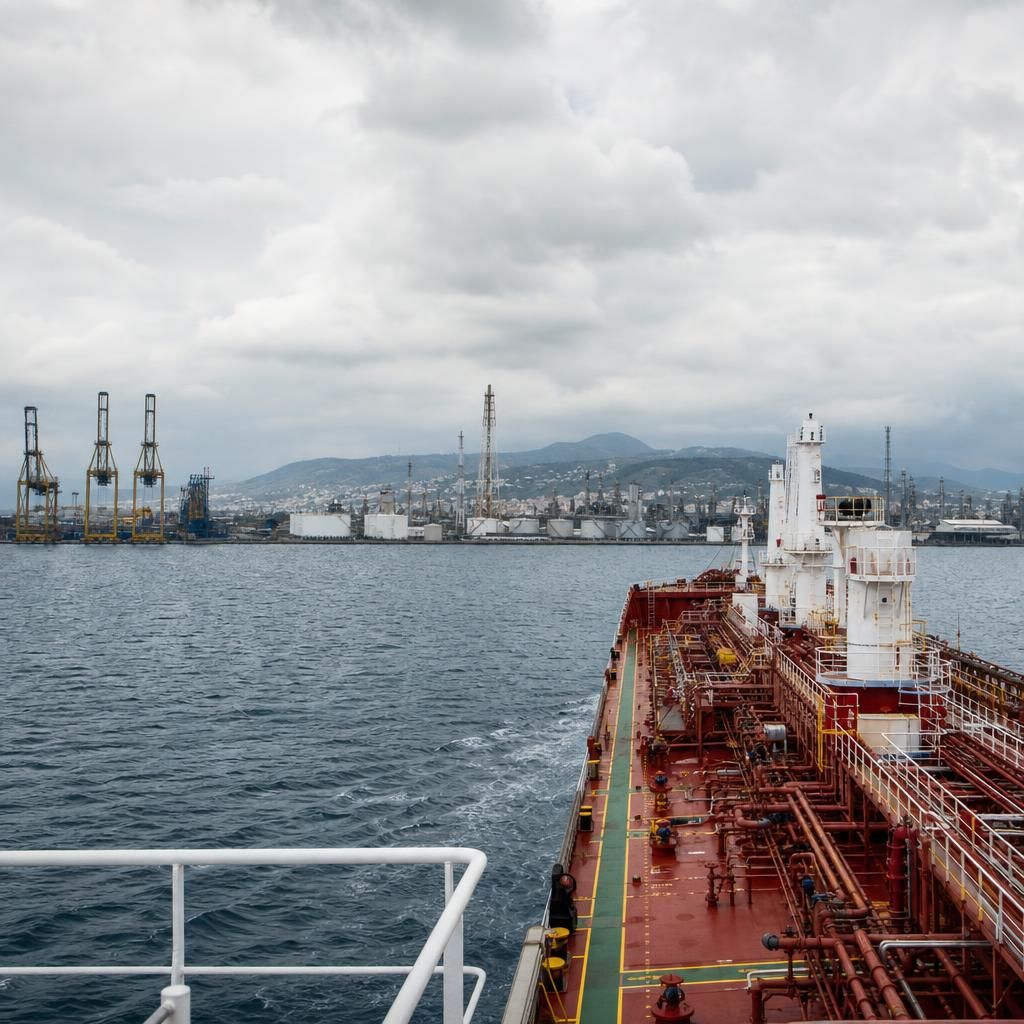
The Strait of Hormuz, through which roughly 20% of global oil supply typically flows, has seen daily transits drop to near zero due to dueling blockades by the US and Iran.[1][2] A ceasefire has largely held since early April, but shipping disruptions persist, choking off crude, fuel, natural gas, and fertilizers. This two-month conflict has already propelled Brent and WTI up 17% and 13% respectively last week alone—their largest weekly gains since the war began.[2]
Iran recently offered a proposal via Pakistani mediators to reopen the strait and end the war, but it postpones nuclear talks and demands the US lift its blockade of Iranian ports—conditions President Trump has firmly rejected.[1][2] Trump canceled a planned envoy trip to Pakistan over the weekend, stating, "We have all the cards," and insisting Iran must dismantle its nuclear program for any deal.[2] Axios reported Tehran’s fresh proposal, but with no nuclear concessions, it faces slim chances of acceptance.[1]
Jason Bordoff, Founding Director of Columbia University’s Center on Global Energy Policy, highlighted the market turmoil: efforts to resume talks have stalled, prolonging the supply disruption.[1] Iran’s Foreign Minister’s visit to Russia further signals hardening positions, with Hezbollah rejecting related ceasefires in Lebanon.[2]
Direct Hit to US Corporate Earnings
US businesses, particularly in energy-intensive sectors, face immediate margin compression from these elevated oil prices. Airlines, which consume vast quantities of jet fuel derived from crude, are bracing for higher operating costs. Delta Air Lines and United Airlines, for instance, have historically seen fuel expenses claim 20-30% of total costs; a sustained $100+ oil environment could shave 5-10% off quarterly earnings per share if hedging is insufficient.
Chemical giants like Dow Inc. and LyondellBasell rely on natural gas liquids and naphtha—byproducts choked by Hormuz disruptions—for feedstock. Fertilizer shortages, a direct fallout, threaten agricultural chemical producers such as CF Industries, where input costs could rise 15-20% absent supply normalization.[1] Last week’s 17% Brent spike alone implies billions in added expenses across the S&P 500.
Consumer discretionary firms are not immune. Higher gasoline prices, with US retail averages already pushing toward $4.50/gallon in coastal states, erode disposable income. Retailers like Walmart and Target report that every 10-cent gasoline increase reduces consumer spending by 0.2-0.5% on non-essentials. Automakers, including Ford and GM, face dual pressures: elevated steel and aluminum costs from energy-linked production, plus softening demand for gas-guzzling SUVs as pump prices climb.
Supply Chain Disruptions Amplify Economic Pain
Beyond oil, the Hormuz blockade disrupts 20% of global LNG shipments and key fertilizer exports, hitting US importers hard. Midstream players like Cheniere Energy, a top LNG exporter, navigate rerouted cargoes around Africa, adding 20-30% to shipping times and costs. Refiners such as Marathon Petroleum and Valero benefit from crack spreads widening to $25/barrel, but downstream consumers bear the brunt.
US manufacturers with Asian supply chains face compounded risks. Semiconductors from Taiwan and South Korea, chemicals from the Gulf, and auto parts from Japan often transit via Hormuz-adjacent routes. While direct Hormuz exposure is limited for some, the ripple effect on global freight rates—up 10% last week—strains just-in-time inventories. Companies like Apple and Tesla, with heavy reliance on Asian electronics and battery components, could see production delays if fertilizer shortages curb crop yields, indirectly hiking food inflation and input costs.
The Port of Houston, a top US energy hub, reports backlog surges as alternative crude imports from West Africa strain capacity. This bottleneck threatens Q2 earnings for logistics firms like J.B. Hunt and Union Pacific, with rail freight rates for energy products up 8% month-over-month.
Inflation Risks and Broader Economic Implications
The supply shock raises acute inflation concerns. Core PCE, the Fed’s preferred gauge, could spike 0.5-1% in coming months from energy pass-through, complicating the central bank’s dual mandate. With Brent at $108, headline CPI might breach 5%, echoing 2022’s energy-driven surge but amplified by wartime premiums.
Jason Bordoff warns: “Alarm bells will ring loudly if the strait doesn’t reopen during May. A global recession is guaranteed if it doesn’t reopen in time.”[1] US GDP growth, forecasted at 2.1% for 2026 by consensus, faces 0.5-1% downward revision if disruptions persist into Q3. Consumer spending, 70% of GDP, weakens as households allocate more to energy—real disposable income growth could halve to 1%.
Financial markets reflect the tension: world shares mixed Monday despite energy gains, with Nasdaq futures down 0.3% on growth fears.[2] The dollar strengthened 0.4% as a safe haven, pressuring multinational earnings. High-yield spreads widened 15bps last week, signaling credit stress for leveraged energy firms.
Sector Winners and Losers
Energy Producers: ExxonMobil and Chevron gain from $100+ realizations; upstream earnings could boost 20-30% QoQ, supporting dividends and buybacks.
Refiners: Phillips 66 enjoys fat margins but volume risks from import constraints.
Losers – Airlines/Transports: American Airlines stock down 4% pre-market; full-year guidance at risk.
Consumer Staples: Procter & Gamble faces packaging cost hikes; pricing power tested.
Opportunistic plays emerge in US shale: EOG Resources and Pioneer Natural Resources ramp Permian output, offsetting 2-3MM bbl/d global shortfall. Yet, ESG-focused funds shun drillers amid war optics.
Path Forward: Diplomatic Breakthrough or Prolonged Pain?
President Trump’s stance—“If they want to talk, they can call us”—leaves little room for compromise without nuclear concessions.[2] Iran’s Russia outreach suggests escalation risks, potentially drawing in OPEC+ responses. Saudi Arabia, spared direct Hormuz flows, could hike exports but at premium prices.
For US businesses, hedging is key: 60-70% of 2026 fuel needs locked in by majors like Southwest Airlines mitigates near-term pain. Long-term, electrification accelerates—EV adoption could rise 15% if oil averages $110.
Investors should monitor Strait transits via satellite data and envoy signals. A May reopening lifts recession odds from 40% to 20%; prolonged closure favors energy overweight, cyclicals underweight. Amid volatility, diversified portfolios with inflation hedges like TIPS and commodities shine.
The US economy’s resilience—bolstered by domestic production covering 13MM bbl/d—tempers downside, positioning corporates for rebound if talks resume. Yet, today’s $108 oil underscores the fragility: geopolitical flares can swiftly upend earnings trajectories and growth outlooks.