US–Cuba Tensions Re-Emerge As A Geopolitical Tail Risk For US Business
Rising frictions between the United States and Cuba are once again drawing global attention, with new reports highlighting Havana’s acquisition of hundreds of military drones and deepening security ties with Russia and Iran. US officials are increasingly concerned about potential threats to Guantanamo Bay, nearby naval assets, and even the US mainland, while Cuban authorities accuse Washington of using security claims to justify additional pressure and sanctions.
These developments come against a backdrop of a long-standing US economic embargo, periodic tightening of sanctions, and heightened political rhetoric in US domestic politics. Although Cuba is a minor direct trading partner for the United States, the re-escalation of tensions in the Caribbean has implications that extend beyond bilateral trade: it intersects with defense supply chains, energy and shipping routes in the Gulf of Mexico, insurance and risk pricing, and broader sentiment toward emerging markets in Latin America.
From a markets perspective, the current situation looks more like a slowly building tail risk than an imminent macro shock. There is no reported direct military clash, and trade volumes at stake are small relative to total US commerce. However, as the global system grapples with overlapping conflicts in Eastern Europe and the Middle East, even localized flashpoints can alter corporate risk assessments, capital allocation, and earnings outlooks in specific sectors.
Strategic Context: Drones, Advisors, And A More Crowded Caribbean
According to recent US intelligence assessments cited in media reports, Cuba has acquired more than 300 military-grade drones, raising concern in Washington about possible surveillance and strike capabilities close to US territory. Reports also indicate the presence of Iranian military advisers in Havana and closer defense cooperation with Russia, including intelligence and training support. Cuban officials, for their part, deny offensive intentions and portray these moves as defensive responses to US pressure.
The US already maintains a substantial military footprint throughout the region, anchored by naval assets in Florida and the base at Guantanamo Bay. The Caribbean also hosts key maritime lanes for US energy imports and exports, as well as shipping routes for containerized trade, agricultural commodities, and refined products. Any perceived militarization in or around Cuba therefore raises questions about the resilience of these flows in a crisis scenario, even if current operations remain unaffected.
The global context matters: drone technology has transformed conflict dynamics from the Middle East to Eastern Europe in recent years. Attacks on oil infrastructure in Saudi Arabia and the UAE, as well as frequent drone use in Ukraine and the Red Sea, have prompted insurers, energy companies, and logistics operators to reprice risk and upgrade defenses. The prospect of a drone-capable actor just 90 miles off the US coast inevitably feeds into similar calculations, even if the probability of escalation remains low.
Direct Economic Exposure: Limited Trade, Concentrated Sector Risks
On a purely bilateral basis, Cuba is not economically significant for US corporates. US trade with Cuba is heavily restricted under the embargo that has been in place since the early 1960s, with limited exemptions for humanitarian goods such as food and medicine. Annual US exports to Cuba have generally been in the low hundreds of millions of dollars in recent years, a negligible figure in the context of total US exports exceeding $3 trillion.
Tourism is one area where US policy shifts have periodically had visible effects. During previous phases of détente, US airlines and cruise operators briefly expanded service to Cuba, only to scale back when travel restrictions were tightened again. Major US carriers that had experimented with routes to Havana reduced capacity when demand and policy clarity failed to meet expectations. Today, most listed hospitality and travel companies have minimal direct exposure to the Cuban market; for them, the latest tensions primarily reinforce the perception that Cuba is an unreliable destination for fresh capital.
In contrast, defense, surveillance, and cybersecurity companies have more material, if indirect, exposure. Heightened concern about potential threats from Cuba — particularly involving drones and cyber capabilities — supports continued demand for missile defense systems, radar and sensor networks, anti-drone technologies, and secure communications. Large US defense contractors, as well as specialized drone-defense firms and cybersecurity providers, could see incremental benefit from elevated spending on surveillance and hardening of critical infrastructure in the Southeast and Gulf regions.
Energy Flows And Shipping Routes: Risk Premiums Rather Than Disruptions
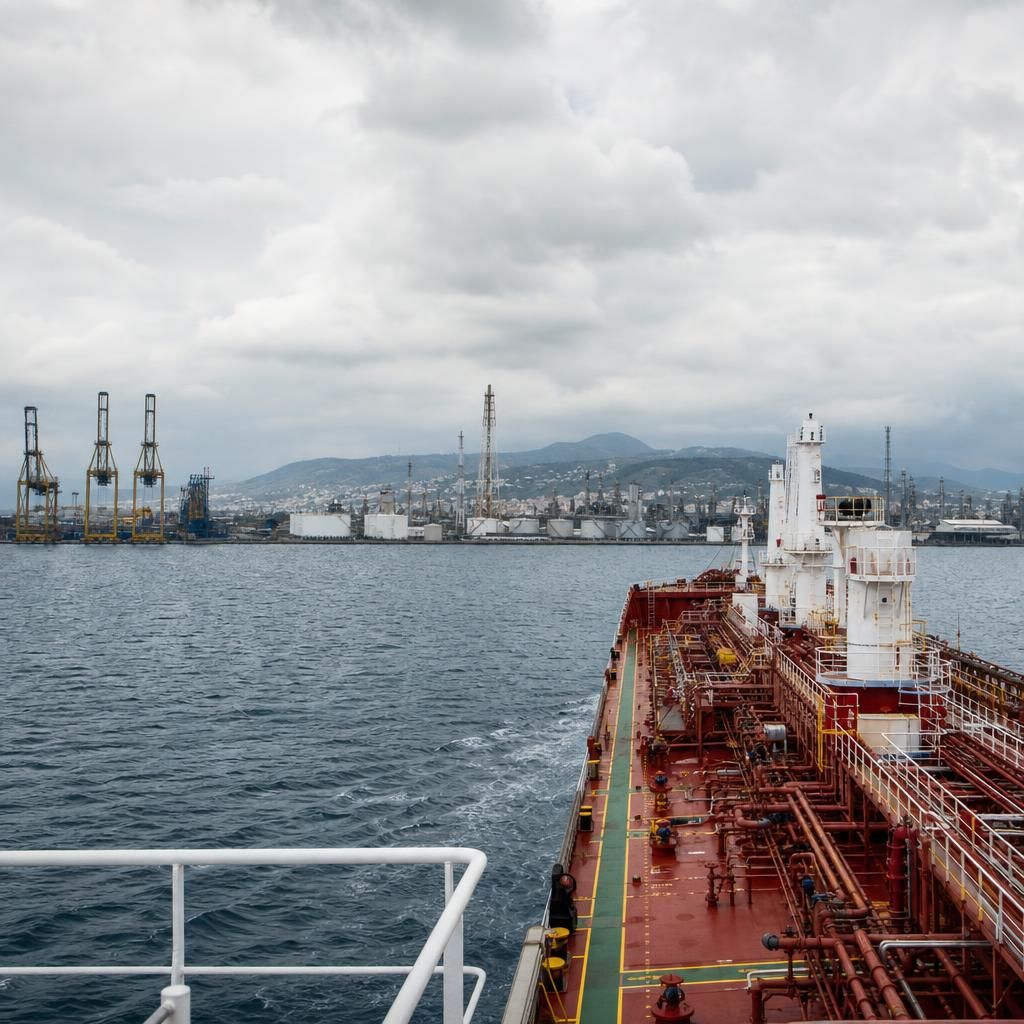
The most important economic channel in play is not bilateral trade with Cuba itself, but the maritime and energy infrastructure that runs through the broader Caribbean basin. The Gulf of Mexico hosts a significant share of US offshore oil and gas production, as well as major terminals for crude and liquefied natural gas exports. Shipping lanes around Cuba connect Gulf ports in Texas and Louisiana with Atlantic and European markets, while Florida ports manage both energy products and container traffic.
At present, there are no credible reports of direct interference with shipping or energy infrastructure linked to the Cuba situation. Ports and pipelines are operating normally, and oil prices have been more responsive in recent weeks to supply-demand factors and larger geopolitical theaters. However, risk managers are acutely aware of the vulnerability of offshore platforms, refineries, and tankers to low-cost drone attacks, a vulnerability highlighted repeatedly in the Middle East.
If US–Cuba tensions continue to rise, insurers may reassess risk premiums for certain routes or assets deemed closer to potential conflict zones. This is analogous, albeit on a far smaller scale, to the elevated insurance costs that have impacted shipping through the Red Sea and around the Horn of Africa amid recent attacks on vessels. Even modest increases in premiums can filter into higher transportation costs for energy and goods, which in turn can marginally affect margins for refiners, shippers, and industrial users of hydrocarbons.
For listed US companies, any such cost increases would likely be absorbed within broader volatility in input prices and logistics expenses. But for investors in energy and shipping equities, a new source of region-specific risk could contribute to higher dispersion of returns, with companies that have diversified route exposure and stronger balance sheets better positioned to navigate potential disruptions.
Supply Chain Planning: Resilience Over Re-Routing
Since the pandemic and the onset of the Ukraine conflict, US corporates have been actively rethinking supply chains, with a focus on resilience, diversification, and regionalization. The evolving US–Cuba situation fits into this broader framework as one more factor prompting companies to stress-test scenarios rather than trigger immediate operational changes.
Logistics-intensive sectors such as retail, autos, and industrials already build contingencies for weather-related disruptions in the Gulf and Caribbean, as hurricanes routinely force temporary port closures or re-routing. Geopolitical risk emanating from Cuba would likely be treated similarly: a variable to be monitored and modeled, but not one that currently justifies large-scale reconfiguration of shipping routes or sourcing strategies.
Where the impact is more visible is in the risk functions of major corporations. Boards and management teams are increasingly embedding geopolitical risk assessment into capital spending decisions, particularly for infrastructure assets along the Gulf Coast and Southeast. This includes more robust physical security, cyber defenses, and continuity planning for ports, petrochemical complexes, and logistics hubs. The net effect is an incremental increase in operating costs and capital expenditures, but potentially also an improvement in long-term resilience that may be rewarded by investors in an environment where disruption risk is structurally higher.
Financial Markets: Limited Direct Shock, Persistent Risk Discount
Equity, bond, and currency markets have so far treated the latest US–Cuba tensions as a background risk rather than a primary driver of price action. US indices remain far more sensitive to earnings trends, Federal Reserve policy expectations, and larger geopolitical developments in Europe and the Middle East. There has been no noticeable Cuba-specific move in broad market benchmarks.
However, pockets of the market could still be affected:
Defense and security equities: Perceptions of elevated threat levels around the US periphery tend to support valuations for defense contractors, intelligence and surveillance technology providers, and cybersecurity firms. The revenue impact may be incremental, but the narrative of sustained demand for security capabilities is reinforced.
Latin America exposure: Investors in regional ETFs and US-listed companies with significant operations across the Caribbean and Central America may apply a slight risk discount to assets perceived as more vulnerable to political and security instability, even if the direct link to Cuba is tenuous.
Insurance and reinsurance: Firms underwriting political risk and marine insurance may adjust models to incorporate a wider range of scenarios. That could support pricing power over time, even if near-term loss experience remains benign.
For US credit markets, the impact is negligible at this stage. Investment-grade and high-yield spreads are more tightly correlated with domestic growth, default trends, and global risk appetite. Only if the situation were to evolve into a broader regional security crisis affecting trade volumes and energy flows would credit investors likely demand a higher risk premium for exposed issuers.
Regulatory And Policy Overhang For US Corporates
Policy uncertainty is a recurring theme for companies with any exposure to the Caribbean and Latin America. Shifts in US sanctions regimes, export controls, and security regulations can alter the operating environment more rapidly than underlying economic fundamentals. As tensions with Cuba rise, there is a higher probability of additional measures related to technology transfer, financial transactions, or maritime operations in the vicinity of Cuban waters.
For banks, compliance and due diligence costs could tick higher if additional screening is required for transactions involving entities with any perceived link to Cuban counterparties or sanctioned parties. Shipping companies may face more stringent reporting requirements when calling at ports in the region. Technology exporters, particularly in dual-use sectors, may encounter tighter export licensing conditions, even if they do not deal directly with Cuba.
These regulatory frictions rarely make headlines but add to the cumulative cost of doing business across borders. Over time, they can influence decisions about where to locate regional hubs, how to structure supply chains, and which markets justify the compliance burden necessary to operate within US legal parameters.
Implications For Corporate Earnings And Strategic Positioning
Looking ahead, the most plausible impact of escalating US–Cuba tensions on corporate earnings is indirect and sector-specific. Large, diversified US companies are unlikely to see a material hit to revenue or margins solely because of developments in Cuba. Instead, the risk manifests through a combination of slightly higher security and insurance costs, potential regulatory tightening, and the opportunity for defense and security firms to capture incremental demand.
Investors should pay particular attention to management commentary in upcoming earnings calls from the following segments:
Defense contractors and aerospace firms: Guidance on US homeland security budgets, coastal surveillance programs, and anti-drone systems could reflect a more supportive spending environment.
Energy majors and midstream operators: Any discussion of risk management around Gulf of Mexico infrastructure and shipping routes may shed light on how seriously companies are treating Caribbean security developments.
Global insurers and reinsurers: Commentary on marine and political risk pricing may hint at emerging risk premia associated with the region.
Logistics and shipping companies: Management may address contingency planning and route diversification, offering insight into how they balance efficiency and resilience.
Strategically, the episode underscores a broader shift in the operating environment for US businesses: geopolitical hotspots are proliferating, and even relatively small economies can become sources of systemic risk if they sit astride critical trade or energy routes. Companies that incorporate this reality into their planning — by investing in security, diversifying routes, and maintaining flexible supply chains — are better positioned to protect earnings in the long run.
Conclusion: A Manageable But Persistent Tail Risk
Escalating US–Cuba tensions and concerns over Havana’s growing drone capabilities are unlikely, by themselves, to derail US growth or corporate earnings. Direct trade exposure is limited, and there is no current disruption to shipping routes or energy flows. Instead, the episode adds another layer to an already complex geopolitical risk landscape, with implications concentrated in defense, security, energy logistics, and insurance.
For investors, the key is to distinguish between headline-driven volatility and fundamental risk. While market-wide reactions have so far been muted, selective opportunities and vulnerabilities are emerging. Defense and security providers may benefit from sustained demand for monitoring and protection systems. Energy and shipping firms face a modest uptick in operating and insurance costs but can mitigate these through diversification and robust risk management. Financial institutions and multinational corporates must continue to adapt to a more regulated and scrutinized cross-border environment.
In sum, the current US–Cuba dynamic is best viewed as a manageable but persistent tail risk — one that reinforces the premium investors increasingly place on resilience, geographic diversification, and disciplined geopolitical risk management across US business and the broader economy.