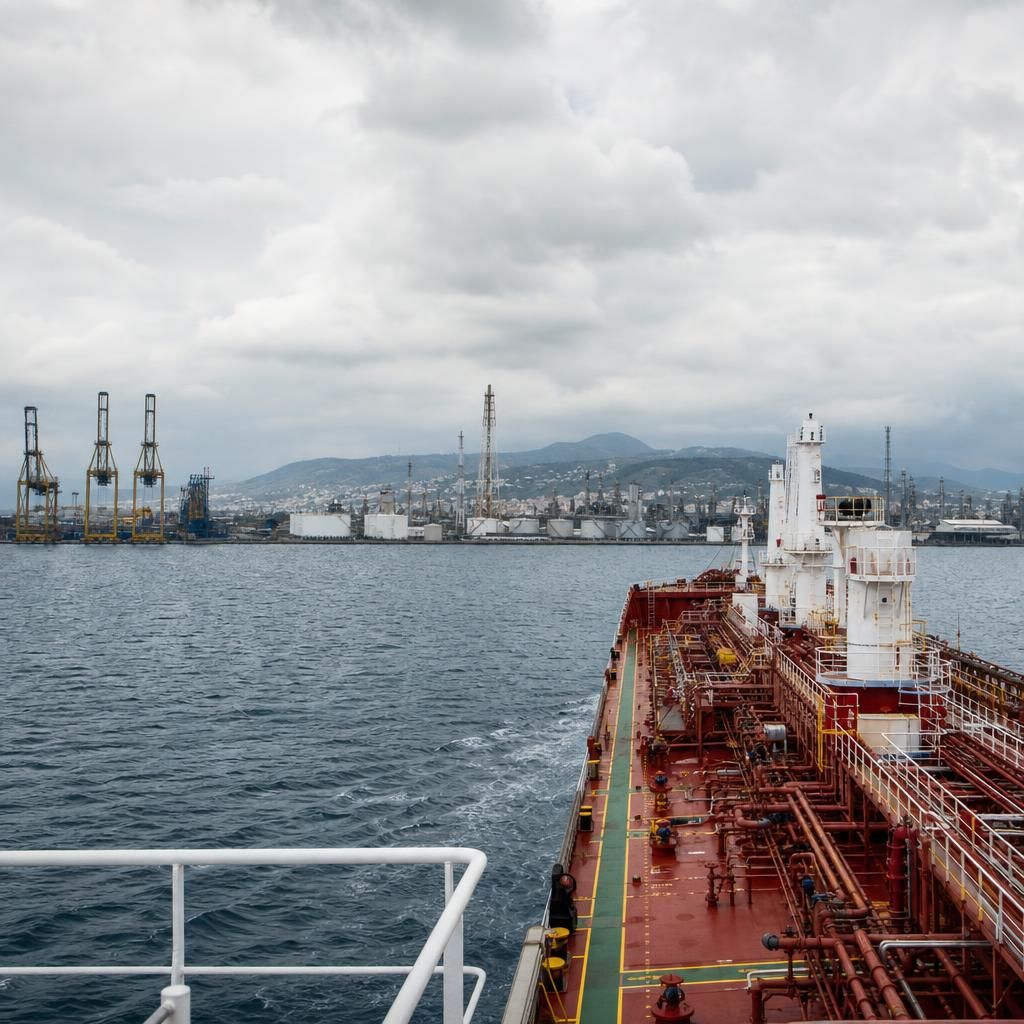

Middle East Escalation Ignites Global Energy Crisis
The ongoing war involving Iran has precipitated a profound disruption to global energy markets, with the blockade of the Strait of Hormuz effectively halting the passage of 20% of the world's oil and liquefied natural gas (LNG). This chokepoint, critical for energy shipments from the Persian Gulf, has triggered what analysts are calling the second major energy shock in five years, following Russia's invasion of Ukraine. As of late April 2026, the death toll in Iran exceeds 3,500, and energy prices have surged, creating immediate headwinds for US businesses and the broader economy.[1][2][3]
Direct Impact on US Energy Imports and Prices
While the US has bolstered its domestic energy production in recent years, it remains exposed to global price volatility. The Strait of Hormuz closure has sent crude oil benchmarks soaring, with Brent crude potentially testing levels above $100 per barrel if disruptions persist. This mirrors the sharp price spikes seen in early 2022, but current forecasts suggest an even more acute fallout due to the scale of the blockade.[3]
US refiners and petrochemical producers, which rely on imported crude and global LNG dynamics, are facing immediate cost pressures. Higher input prices translate directly to elevated gasoline and diesel costs at the pump, with national averages already climbing toward $4 per gallon in affected regions. For corporate America, this means ballooning transportation and logistics expenses, which could add billions to operational costs across sectors like manufacturing, retail, and agriculture.
Corporate Earnings Under Siege
Energy-intensive industries stand to suffer the most. Airlines such as Delta and United, already navigating post-pandemic recovery, could see fuel costs—typically 25-30% of operating expenses—rise by 20-40% in the coming quarters. Historical precedents from the 2022 shock showed S&P 500 airlines reporting earnings misses of up to 15% due to fuel surcharges. Manufacturers like General Motors and Ford, dependent on petrochemicals for plastics and synthetic materials, face similar margin compression, potentially shaving 5-10% off adjusted EBITDA if prices sustain elevated levels.[3]
Consumer staples and discretionary firms are not immune. Procter & Gamble and Coca-Cola have warned in past energy crises of passing on 3-5% price increases to consumers, risking demand erosion amid already softening retail sales. Recent data from the first month of the conflict indicates major oil and gas companies profited over $30 million per hour, underscoring the bifurcated impact: while ExxonMobil and Chevron CEOs have seen their shareholdings surge—Chevron's Michael Wirth gaining over £44 million—downstream users bear the brunt.[3]
Tech giants, often viewed as insulated, are increasingly vulnerable via data centers and AI infrastructure. The power demands of hyperscalers like Amazon Web Services and Microsoft Azure amplify exposure to natural gas price spikes, with LNG disruptions pushing US Henry Hub futures higher. This could inflate capex budgets by 10-15%, diverting funds from buybacks and R&D.
Supply Chain Disruptions Ripple Across Industries
Beyond prices, the energy shock exacerbates existing supply chain fragilities. Shipping rates through alternative routes, such as around the Cape of Good Hope, have doubled, delaying critical components for US automakers and electronics firms. Semiconductor supply chains, still recovering from prior disruptions, face compounded risks as energy powers fabrication plants in Asia, many of which draw from Middle Eastern LNG.
Food and agriculture sectors, key to US exports, are hit hard. Fertilizer production, reliant on natural gas, has seen costs jump, with US farmers facing 20-30% hikes. This flows through to higher grocery prices, contributing to sticky inflation that complicates the Federal Reserve's rate-cutting path. Global Witness analysis highlights how such shocks disproportionately burden emerging markets, which receive only 15% of clean energy investments despite driving demand growth, indirectly pressuring US agribusiness giants like Cargill and Archer Daniels Midland.[1][3]
Broader Economic Implications for the US
The macroeconomic fallout is multifaceted. GDP growth forecasts for 2026, previously pegged at 2.1% by the IMF, now risk downward revisions of 0.5-1.0 percentage points if the conflict drags into Q3. Inflation, targeted at 2%, could rebound to 3.5-4%, anchored by energy's 8% weighting in the CPI basket. This stagflationary mix—slower growth with hotter prices—forces the Fed into a delicate balancing act, potentially delaying rate cuts and tightening financial conditions.
Consumer spending, 70% of US GDP, faces erosion as households grapple with rising utility bills and fuel costs. The UK experience offers a cautionary tale: energy bills have surged, mirroring potential US trajectories where average household expenditures could increase by $500-800 annually. Equity markets reflect this unease, with the S&P 500 energy sector up 10-15% since late February strikes, while industrials and materials lag by 5-8%.[3]
Global military expenditure, reaching $2.887 trillion in 2025 per the Stockholm International Peace Research Institute, underscores escalating geopolitical risks. Defense contractors like Lockheed Martin and Raytheon benefit from heightened US-Israel alignments, with order backlogs swelling. However, this fiscal diversion strains budgets, limiting infrastructure spending crucial for supply chain resilience.[3]
Opportunities Amid the Turmoil
Not all sectors are losers. US shale producers, unencumbered by Hormuz dependencies, are ramping output; Occidental Petroleum and EOG Resources could boost free cash flow by 25% at current prices. Refiners like Valero and Marathon Petroleum profit from crack spreads widening to $25-30 per barrel. Longer-term, the crisis accelerates clean energy transitions: governments are urged to end fossil fuel subsidies and incentivize efficiency, potentially unlocking $1 trillion in US investments by 2030.[1]
Energy efficiency and renewables offer hedges. Businesses adopting LED lighting, electrification, and demand-response tech can mitigate 10-20% of costs. Policy shifts, including tax credits from the Inflation Reduction Act, position US firms advantageously against European peers burdened by higher LNG imports.
Strategic Responses for US Businesses
C-suite executives must prioritize resilience. Diversifying suppliers beyond Asia-Middle East corridors, hedging fuel purchases via futures, and investing in on-site renewables are imperative. Scenario planning for prolonged disruptions—assuming 6-12 months of elevated prices—will be key to preserving earnings guidance.
Supply chain audits reveal vulnerabilities: 40% of S&P 500 firms still source critical inputs from disruption-prone regions. Accelerating nearshoring to Mexico and domestic manufacturing, bolstered by CHIPS Act subsidies, mitigates risks while supporting job growth.
Outlook: Navigating Uncertainty with Vigilance
The Iran conflict's energy shock presents profound challenges but also inflection points for adaptation. US businesses that swiftly address cost inflation, fortify supply chains, and lean into domestic energy strengths will emerge stronger. While near-term earnings pressures mount, a slightly bullish stance persists on American resilience, underpinned by technological edge and policy tailwinds. Investors should monitor Hormuz shipping updates and Fed rhetoric closely, positioning portfolios for volatility with energy tilts and defensive quality names.
In this high-stakes environment, resilience—through clean energy, efficiency, and strategic foresight—remains the paramount priority for sustaining economic momentum.[1]