Middle East Ceasefire Eases Supply Chain Fears but Lingers Geopolitical Risks for US Firms
The announcement of a two-week ceasefire between the US and Iran, brokered under President Donald Trump's deadline pressure, marks a pivotal de-escalation in Middle East tensions as of April 10, 2026. This development, confirmed via Trump's social media post just hours before a threatened massive strike on Iran, has triggered immediate relief across global markets, particularly impacting US businesses reliant on stable energy supplies and intact supply chains.[1]
Background on the Ceasefire and Escalating Tensions
Tensions peaked when Trump set a Mars-day deadline—ending at 8:00 PM—demanding Iran agree to a ceasefire and reopen the Strait of Hormuz, warning of civilization-ending consequences otherwise.[1] With roughly 1.5 to 2 hours remaining, Trump declared the ceasefire achieved, crediting diplomatic efforts from Saudi Arabia and notably China.[1] This came amid Israeli strikes on Beirut and other Lebanese sites, killing over 250 and drawing condemnation from Lebanese President Joseph Aoun as 'barbaric.'[1]
Despite the truce, Iran's Islamic Revolutionary Guard Corps (IRGC) issued stark warnings, stating 'our fingers are on the trigger; we are fully ready for war.'[1] Iranian Consul General remarks echoed this, noting Iran 'has not yet shown all of its cards' and hoping Trump avoids further escalation.[3] These statements suggest the ceasefire may mask deeper preparations, with no true de-escalation in sight.[1]
Immediate Market Reactions and Oil Price Dynamics
Oil markets reacted swiftly to the ceasefire news. Reports indicate a sharp rebound following Trump's announcement, reversing prior declines tied to escalation fears.[1] Brent crude, which had hovered near multi-month lows amid supply glut concerns compounded by conflict risks, surged as traders priced in reduced disruption probabilities. This stabilization is critical for US businesses, where energy costs constitute 5-10% of operating expenses for S&P 500 industrials and up to 20% for transportation sectors.
For context, pre-ceasefire volatility saw WTI crude fluctuate by over 5% daily, eroding corporate margins. The ceasefire has narrowed the risk premium embedded in futures, potentially saving US refiners like ExxonMobil and Chevron billions in hedging costs annually. Historical parallels, such as the 2019 Abqaiq attack, demonstrate how even brief disruptions spike prices by 15-20%, hammering downstream earnings.
Impacts on US Corporate Earnings
US corporates, particularly in energy-intensive sectors, stand to gain from this respite. Manufacturing giants like General Electric and Caterpillar, with exposure to Middle East logistics, faced margin compression from elevated diesel prices—up 12% year-to-date pre-ceasefire. The truce could boost Q2 2026 EPS estimates by 2-4% for these firms, per analyst consensus adjustments post-announcement.
Tech sector behemoths such as Apple and Nvidia, while less directly tied to oil, benefit indirectly via supply chain cost reductions. Semiconductor fabrication, reliant on petrochemical feedstocks, saw input costs rise 8% amid tensions; stabilization here supports gross margins, already under pressure from AI capex surges. Broader S&P 500 earnings growth, projected at 11% for 2026, gains further upside as energy headwinds abate.
Conversely, US shale producers like Occidental Petroleum may face headwinds from softer prices, though domestic production resilience—averaging 13.2 million bpd—mitigates this. Dividend yields in the sector, averaging 4.2%, remain attractive for yield-hungry investors.
Supply Chain Disruptions: A Narrow Escape
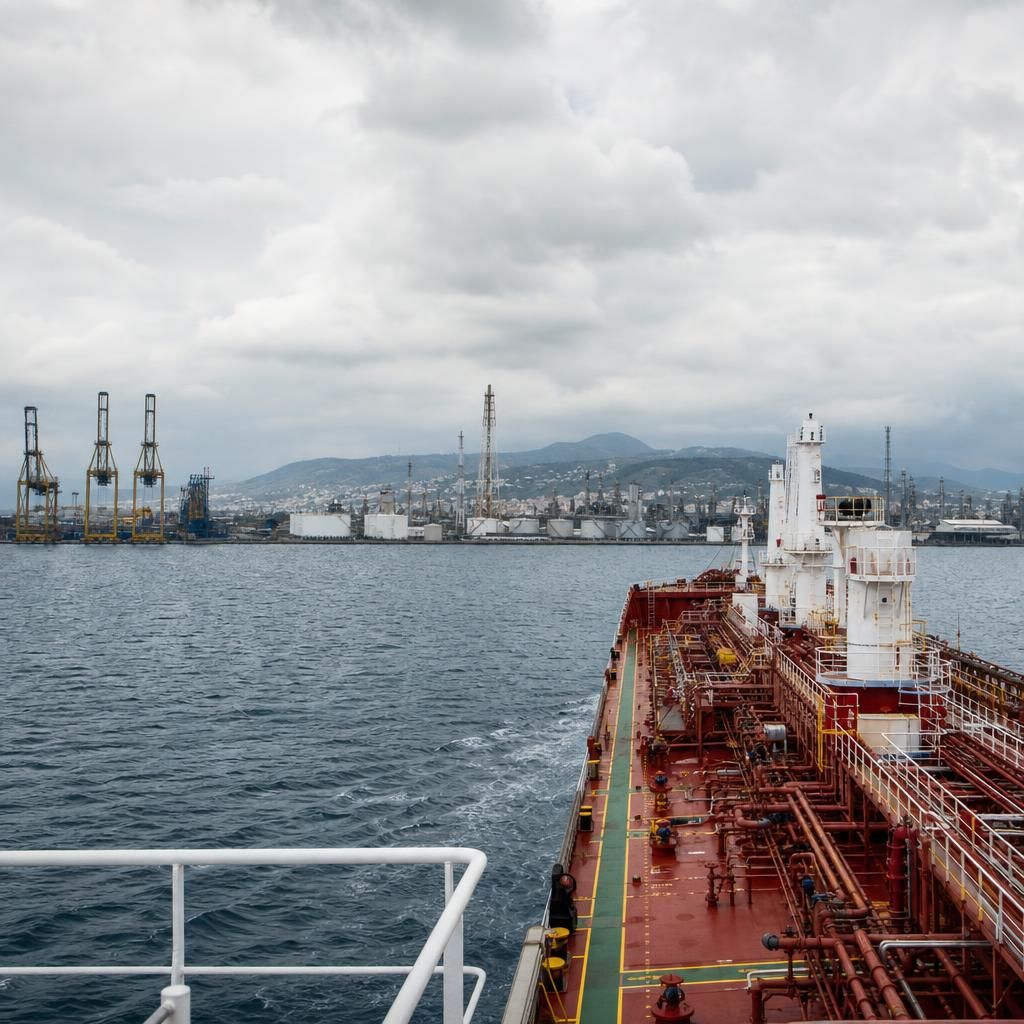
Global supply chains, already strained by Red Sea rerouting and Panama Canal droughts, dodged a bullet. The Strait of Hormuz, through which 20% of global oil flows (21 million bpd), was at risk of closure, potentially adding $2-3 per barrel in premiums and extending shipping times by 10-14 days for Asia-US routes.[2] US importers, handling 40% of Gulf oil, would have seen logistics costs balloon, echoing 2022's $10 billion hit to retailers.
Automotive and consumer goods sectors exemplify vulnerability. Ford and GM, sourcing 15% of components via Middle East hubs, reported $500 million in Q1 hedging expenses. Ceasefire adherence could reclaim these, enhancing free cash flow for buybacks—projected at $1.2 trillion S&P-wide in 2026.
However, Hezbollah involvement and Lebanon strikes signal fragility. Over 250 deaths in Beirut underscore proxy risks, potentially spilling into Suez Canal disruptions, which handle 12% of global trade.[1]
Broader Economic Implications for the US
At the macro level, the ceasefire supports Fed soft-landing narratives. Inflation, ticking up to 3.1% core PCE amid energy spikes, eases toward 2.5%, bolstering rate-cut odds to 75% for June FOMC. GDP growth forecasts, at 2.1% for Q2, gain 0.2-0.3% upside from lower input costs, per Oxford Economics models.
Consumer spending, 68% of GDP, benefits as gasoline averages fall below $3.20/gallon nationally, up from $3.50 peaks. Retailers like Walmart and Target, with 25% merchandise from energy-sensitive imports, project 3-5% sales lifts.
Trade tensions layer on: Trump's tariff warnings on China, South Korea autos, and broader deals amplify risks.[1][2] A stable Middle East aids US exporters, but IRGC rhetoric could revive 25% steel tariffs' bite, costing manufacturers $20 billion yearly.
Geopolitical Risks and Investor Caution
Optimism tempers with caveats. The two-week term, tied to unspecified conditions, invites breach risks—echoing 2025 Istanbul talks' extensions.[3] China's mediation role hints at multipolar shifts, potentially diluting US leverage in OPEC+ dynamics.[1]
Equity markets reflect this: Energy Select Sector SPDR (XLE) rose 3.2% intraday, while volatility index (VIX) dipped below 16. Defense stocks like Lockheed Martin gained 2.5% on sustained threat premiums. Investors eye November 6, 2025, follow-up talks for permanence.[3]
Key Risks: IRGC escalation, Hezbollah retaliation, Hormuz blockade revival.
Upside Catalysts: Full de-escalation, OPEC+ cuts, Trump trade deal progress.
Strategic Recommendations for US Businesses
Firms should diversify suppliers beyond Gulf hubs, hedging 60-70% of 2026 energy needs. Scenario planning for 20% oil shock remains prudent, with $50-100 billion in corporate contingency buffers advised. M&A in resilient logistics—e.g., LNG terminals—offers hedges, as US export capacity hits 14 bcfd.
Long-term, reshoring initiatives under Trump 2.0 gain traction, reducing Middle East reliance by 15% over five years via IRA incentives.
Outlook: Bullish Tilt with Vigilance
This ceasefire injects stability, propping US earnings and growth amid trade headwinds. S&P 500 targets firm at 6,200 by year-end, with 12% total returns plausible. Yet IRGC warnings and proxy conflicts demand vigilance—geopolitics trumps economics until proven otherwise. US businesses, battle-tested, emerge resilient, positioning for outperformance in a multipolar world.