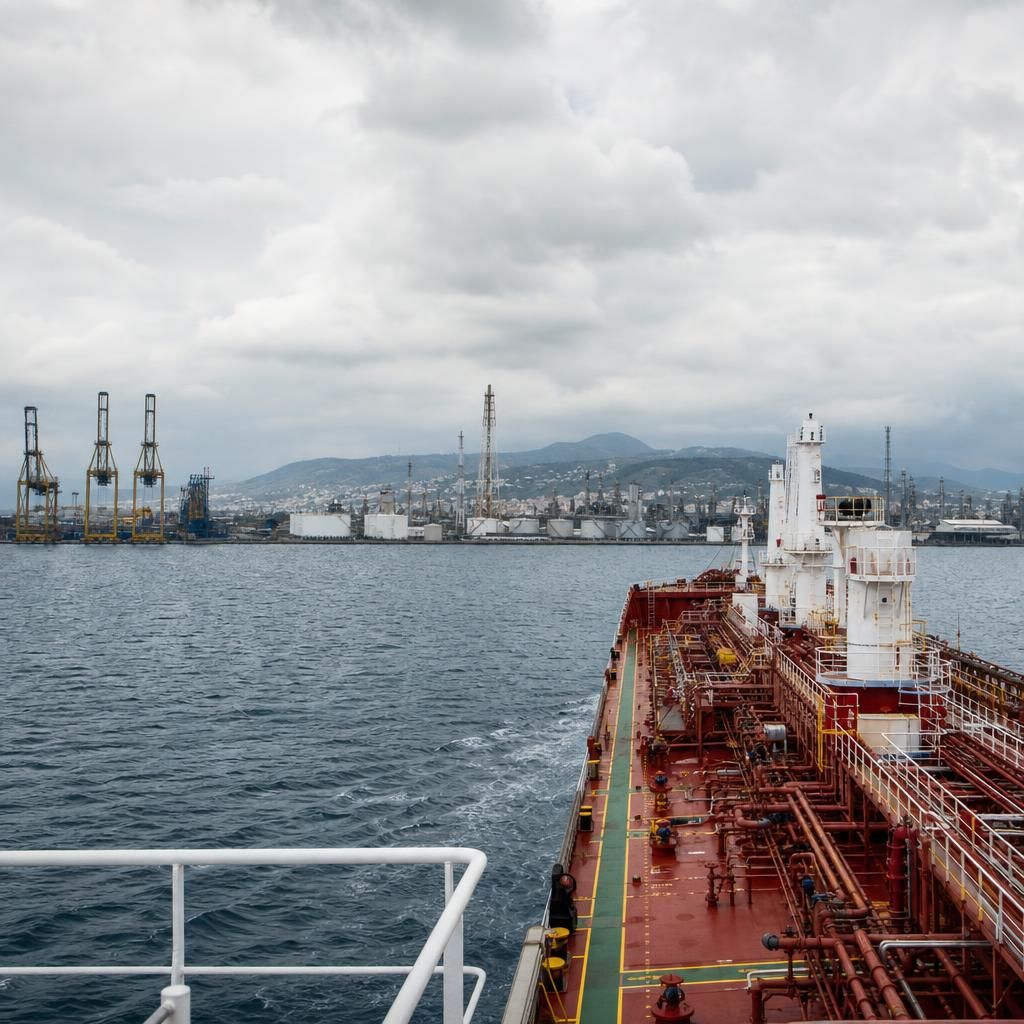
Critical Juncture: Iran's Hormuz Toll System Emerges as Primary Economic Threat
The most significant business-impacting development from the current geopolitical landscape is not the widely discussed US-China trade tensions or AI regulatory debates, but rather Iran's announcement of a formal toll payment system for vessels transiting the Strait of Hormuz—a chokepoint through which approximately 21% of global petroleum passes daily. This development, combined with escalating US-Iran military posturing, represents an immediate and material threat to corporate earnings, supply chain stability, and global inflation dynamics.
As of April 26, 2026, Iran has signaled its intention to convert wartime leverage into a structured revenue mechanism, effectively monetizing its control over one of the world's most strategically vital maritime routes. Iranian officials have explicitly stated that the toll system aims to compensate for losses accumulated over years of Western economic sanctions and maritime disruptions. This is not rhetorical posturing—it represents a fundamental shift in how energy transit costs will be calculated for the remainder of 2026 and potentially beyond.
The Oil Price Multiplier Effect
Iranian officials have warned that US naval blockade strategies could trigger crude oil prices to surge above $120 per barrel, a level not seen since the 2008 financial crisis. For context, current market dynamics already reflect elevated geopolitical risk premiums. A sustained move above $120/barrel would represent a 40-60% increase from baseline 2026 energy prices, creating cascading effects across multiple corporate sectors.
The mathematics are unforgiving: every $10 increase in crude oil per barrel translates to approximately $0.10-$0.15 in additional per-gallon gasoline costs, which directly impacts transportation, logistics, and consumer discretionary spending. For corporations with thin operating margins—particularly in retail, quick-service restaurants, and regional transportation—this represents an earnings headwind of 200-400 basis points.
Energy-intensive industries face even more severe pressure. Petrochemical manufacturers, fertilizer producers, and plastics companies operate on margins of 8-15%. A sustained $120+ oil environment could compress these margins by 30-50%, forcing either price increases that risk demand destruction or margin compression that triggers guidance reductions.
Supply Chain Fragmentation and Rerouting Costs
The Strait of Hormuz handles roughly 21% of global seaborne petroleum trade. Any disruption—whether through formal toll systems, military confrontation, or vessel detention—forces shipping to reroute through longer, more expensive passages. The alternative route around the Cape of Good Hope adds 6,000+ nautical miles and 10-14 additional days of transit time.
This rerouting creates multiple cost pressures:
Fuel surcharges: Extended voyage times increase bunker fuel consumption by 15-20%, adding $50,000-$150,000 per vessel transit
Inventory carrying costs: Extended supply chain duration ties up working capital, increasing financing costs and reducing inventory turnover ratios
Toll and fee structures: Iran's announced toll system adds direct per-barrel transit costs, effectively creating a new tax on energy imports
Insurance premiums: Elevated geopolitical risk in the region drives marine insurance costs higher, adding 0.5-1.5% to shipping expenses
For multinational corporations with complex supply chains spanning Asia, Europe, and North America, these cumulative costs represent material headwinds to 2026 earnings guidance. Companies with significant exposure to Middle Eastern energy sourcing—including refiners, chemical manufacturers, and utilities—face the most acute pressure.
Sectoral Impact Analysis
Energy and Utilities: Oil and gas majors face a paradoxical situation. While higher crude prices support upstream cash flows, downstream refining margins compress as consumers reduce consumption. Integrated energy companies with significant refining exposure will see earnings volatility. Utilities dependent on natural gas face cost pressures that may not be fully recoverable through rate adjustments, particularly in regulated markets.
Transportation and Logistics: Shipping companies, trucking firms, and air cargo operators face immediate margin compression. Fuel surcharges provide partial offset, but competitive dynamics limit full pass-through. Regional carriers with limited pricing power face the most severe pressure. Expect guidance reductions across the sector within 60 days if Hormuz tensions persist.
Manufacturing and Industrials: Companies with significant energy input costs—steel producers, aluminum smelters, cement manufacturers—face margin compression. These sectors operate on 5-12% EBITDA margins; a $120+ oil environment could reduce margins by 25-40%. Capital equipment manufacturers dependent on these inputs face downstream demand destruction as customers defer purchases.
Consumer Discretionary: Higher energy costs reduce consumer purchasing power, particularly in lower-income segments. Retailers, restaurants, and automotive companies face demand headwinds. Margin compression from higher logistics costs compounds the demand challenge. Expect same-store sales growth to decelerate materially if oil remains elevated.
Technology and Software: While less directly exposed to energy costs, tech companies face margin pressure from increased data center cooling costs and supply chain disruptions affecting semiconductor and component sourcing. Cloud infrastructure providers face the most acute exposure.
Geopolitical Escalation Risk Premium
The current situation reflects genuine military escalation risk. President Trump has issued explicit nuclear warnings to Iranian leadership, while Iran has signaled preparation for a potential second phase of conflict with updated military target plans. The UN Security Council has convened emergency sessions to address the threat of kinetic conflict.
This is not theoretical risk—it represents a material probability of military action that could temporarily close the Strait of Hormuz entirely. A complete closure would spike crude oil to $150-$200+ per barrel within days, creating a genuine economic shock comparable to the 1973 oil embargo or 2008 financial crisis.
Corporate risk management teams should model scenarios assuming: (1) sustained $120+ oil for 6-12 months, (2) temporary Strait closure lasting 2-4 weeks, and (3) extended supply chain rerouting adding 15-25% to logistics costs. These are not edge cases—they represent material probability outcomes given current geopolitical dynamics.
Market Implications and Investor Positioning
Equity markets have reacted with volatility as world leaders call for restraint, but the underlying fundamentals remain concerning. Companies with significant energy exposure, thin margins, or complex Middle Eastern supply chains face material earnings risk. Conversely, energy producers, shipping companies with pricing power, and companies with hedged energy costs may benefit from elevated commodity prices.
The most prudent corporate strategy involves: (1) accelerating supply chain diversification away from Hormuz-dependent routes, (2) implementing energy hedging programs to lock in costs, (3) communicating transparently with investors about geopolitical exposure, and (4) preparing contingency plans for extended supply disruptions.
For investors, the current environment demands sector rotation toward energy producers and away from energy-intensive manufacturers with limited pricing power. The risk-reward calculus has shifted materially in favor of defensive positioning until geopolitical tensions demonstrate clear de-escalation.
Conclusion
Iran's announced toll system for Strait of Hormuz transit, combined with escalating US-Iran military tensions, represents the most material near-term threat to US corporate earnings and supply chain stability. Unlike trade wars or regulatory changes that unfold over quarters, energy disruptions create immediate margin compression across multiple sectors. Companies must act now to assess exposure, implement hedging strategies, and communicate risks to stakeholders. The window for proactive risk management is narrowing as geopolitical tensions approach critical thresholds.