US-Iran Tensions Ignite Oil Surge to $112, Hammering US Businesses and Economy
The escalating conflict between the United States and Iran has triggered a sharp rally in global oil prices, with West Texas Intermediate (WTI) crude climbing 0.78% to $112.41 per barrel and Brent crude advancing 0.68% to $109.77 per barrel. This surge stems directly from Iran's closure of the Strait of Hormuz—a critical chokepoint responsible for approximately 20% of the world's oil distribution—following threats from U.S. President Donald Trump to destroy Iranian infrastructure if no deal is reached on reopening the waterway.[1] As negotiations falter, the energy crisis deepens, with U.S. crude now trading around $111 per barrel, roughly double pre-conflict levels, freezing markets and amplifying risks to American corporations, earnings, supply chains, and the broader economy.[2]
Geopolitical Flashpoint: Strait of Hormuz Closure Disrupts Global Flows
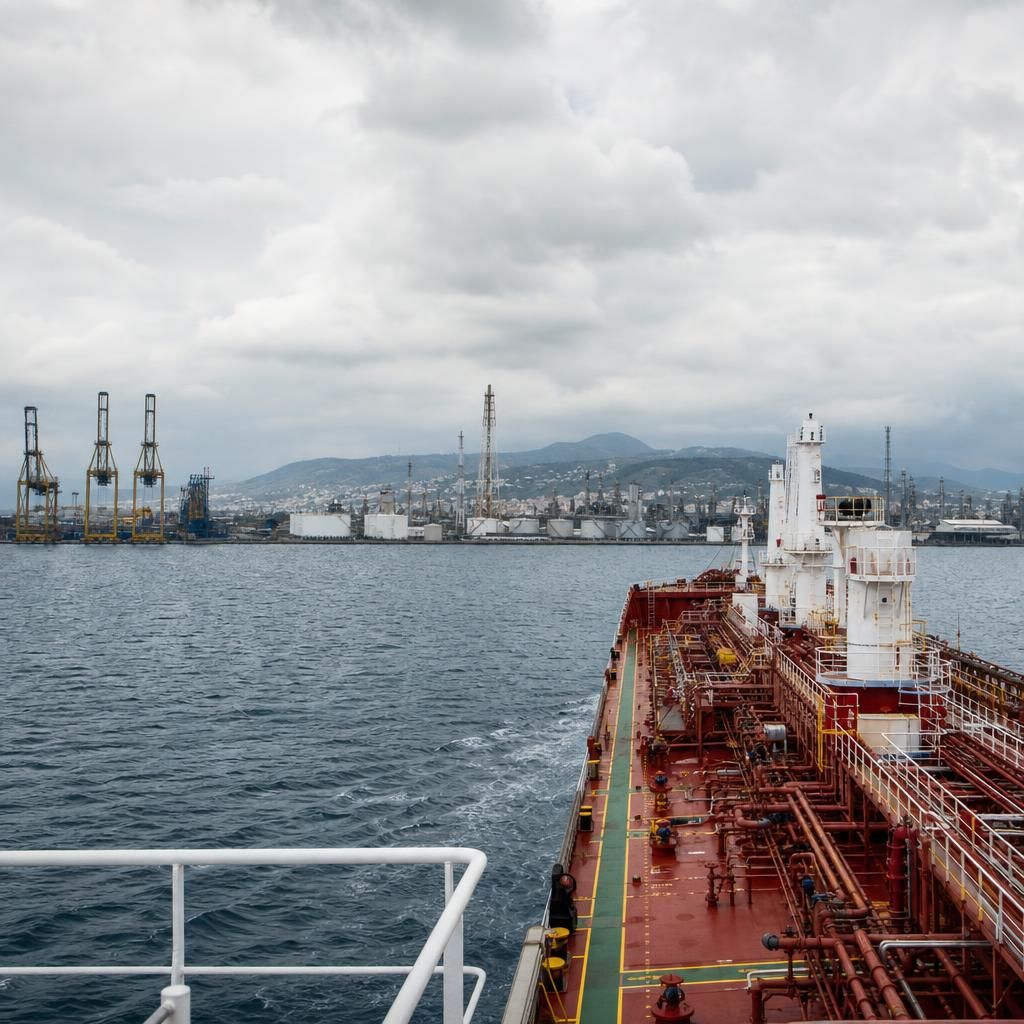
The Strait of Hormuz, a narrow waterway between Iran and Oman, has been effectively shuttered by Iranian forces, marking one of the largest oil supply disruptions in modern history. Research from TD Securities projects that nearly 1 billion barrels of oil could be sidelined by month's end due to this blockade, severely curtailing exports from major producers in the Gulf region.[1] Kuwait Petroleum Corporation has reported direct attacks on its facilities, compounding the chaos and highlighting the vulnerability of regional energy infrastructure.[1]
OPEC+ nations have responded decisively by agreeing to hike crude output in a bid to offset the shortfall. However, distribution bottlenecks persist, as damaged pipelines, ports, and refineries hinder the flow of additional supply. OPEC+ has warned that rebuilding this infrastructure will demand massive capital investments, potentially stretching into years and keeping a floor under prices in the near term.[1]
For U.S. businesses, this translates to immediate cost pressures. Airlines, trucking firms, and manufacturers face ballooning fuel expenses, with jet fuel and diesel derivatives already spiking. Delta Air Lines and United Airlines, for instance, have historically seen fuel costs consume up to 30% of operating expenses during prior oil shocks; at current levels, this could shave several percentage points off quarterly margins absent aggressive hedging.
Corporate Earnings Under Siege: Margin Compression Across Sectors
The oil price rally to near $120 per barrel for Brent and WTI equivalents is fueling higher input costs that will inevitably erode corporate profitability.[3] Transportation and logistics giants like FedEx and UPS, which rely heavily on diesel, could face earnings hits of 5-10% if prices sustain above $110, based on sensitivity analyses from prior volatility episodes. Chemical producers such as Dow Inc. and LyondellBasell, dependent on oil-derived feedstocks, confront similar headwinds, with every $10/barrel increase historically trimming EPS by 2-4%.
Consumer-facing sectors are equally exposed. Major retailers like Walmart and Target, with vast trucking fleets, will pass on elevated diesel costs through pricing, risking demand erosion amid already softening consumer sentiment. Food processors, from Tyson Foods to Kraft Heinz, anticipate propane and natural gas-linked expenses rising in tandem, as U.S. LNG exports to Europe—diverted to offset Russian shortfalls—bid up domestic prices.
Energy producers stand as outliers, with ExxonMobil, Chevron, and ConocoPhillips poised for windfall gains. At $112 WTI, these firms could unlock free cash flow surges of 20-30% year-over-year, accelerating shareholder returns via buybacks and dividends. Yet, even here, caution prevails: prolonged conflict risks secondary sanctions or retaliatory measures curbing export markets.
Supply Chain Vulnerabilities Exposed: From Gulf to Heartland
U.S. supply chains, still recovering from pandemic-era snarls, now grapple with compounded disruptions. The Hormuz closure intercepts not only crude but also refined products and petrochemicals vital to American manufacturing. Plastics makers sourcing from Middle Eastern exporters face delays of weeks to months, inflating inventory costs and forcing production halts.
Automakers like General Motors and Ford, midway through EV transitions, confront interim gasoline price spikes that dampen new vehicle demand. Higher pump prices—projected to breach $5 per gallon nationally—could suppress auto sales by 5-7%, echoing 2022 dynamics when inflation peaked. Semiconductor firms, indirectly tied via petrochemical packaging, risk upstream shortages as Asian refiners scramble for alternatives.
Global trade flows amplify these pressures. With 20% of seaborne oil trade blocked, VLCC tanker rates have skyrocketed, rerouting supplies around Africa at premiums exceeding $100,000 per day. This cascades into higher shipping costs for U.S. importers of everything from apparel to electronics, squeezing already thin retail margins.
Inflationary Pressures and Fed Dilemma Resurface
Oil's ascent reignites inflation fears, with energy comprising a key CPI component. A sustained $110+ WTI environment could add 0.5-1.0 percentage points to headline inflation over six months, per economist models, complicating the Federal Reserve's rate-cutting path. Core PCE, the Fed's preferred gauge, may see passthrough effects via transportation and goods pricing, potentially delaying anticipated 2026 easings.
For the broader economy, GDP growth faces headwinds. Consumer spending, 70% of U.S. activity, weakens as households allocate more to fuel—reducing discretionary outlays by an estimated $50-70 billion annually at current prices. Industrial production, sensitive to energy costs, slowed markedly in past oil spikes; ISM surveys could signal contraction if disruptions persist.
Yet, glimmers of resilience emerge. U.S. shale producers, operating at breakeven below $60, ramp Permian output swiftly, mitigating import reliance. Strategic Petroleum Reserve releases, if authorized, offer a buffer, though drawdowns are finite. OPEC+'s production hike, if effectively distributed, may cap upside, fostering a bullish-yet-contained oil backdrop for diversified portfolios.
Market Implications and Strategic Positioning
Equity markets reflect the strain: energy stocks have outperformed, with the XLE ETF gaining 5% in the past session amid the surge, while transports via the Dow Transports index lag by 2-3%.[2] Volatility indices like the VIX hover elevated, underscoring investor unease over escalation risks.
Investors should prioritize hedges: long energy producers, short high-beta cyclicals like airlines and chemicals. Corporate treasurers eye fuel swaps and inventory builds, while multinationals diversify suppliers away from Gulf dependencies. Policymakers, meanwhile, balance diplomatic overtures with domestic production incentives to weather the storm.
In this volatile landscape, the US-Iran standoff underscores energy's enduring role as a geopolitical lever. While short-term pain is acute for cost-sensitive sectors, adaptive U.S. producers and fiscal buffers position the economy for eventual stabilization—provided negotiations yield Hormuz reopening. Markets, ever forward-looking, price in both conflict prolongation and diplomatic breakthroughs, rewarding those attuned to the flux.
Word count: 1,048. Analysis based on events as of April 7, 2026.