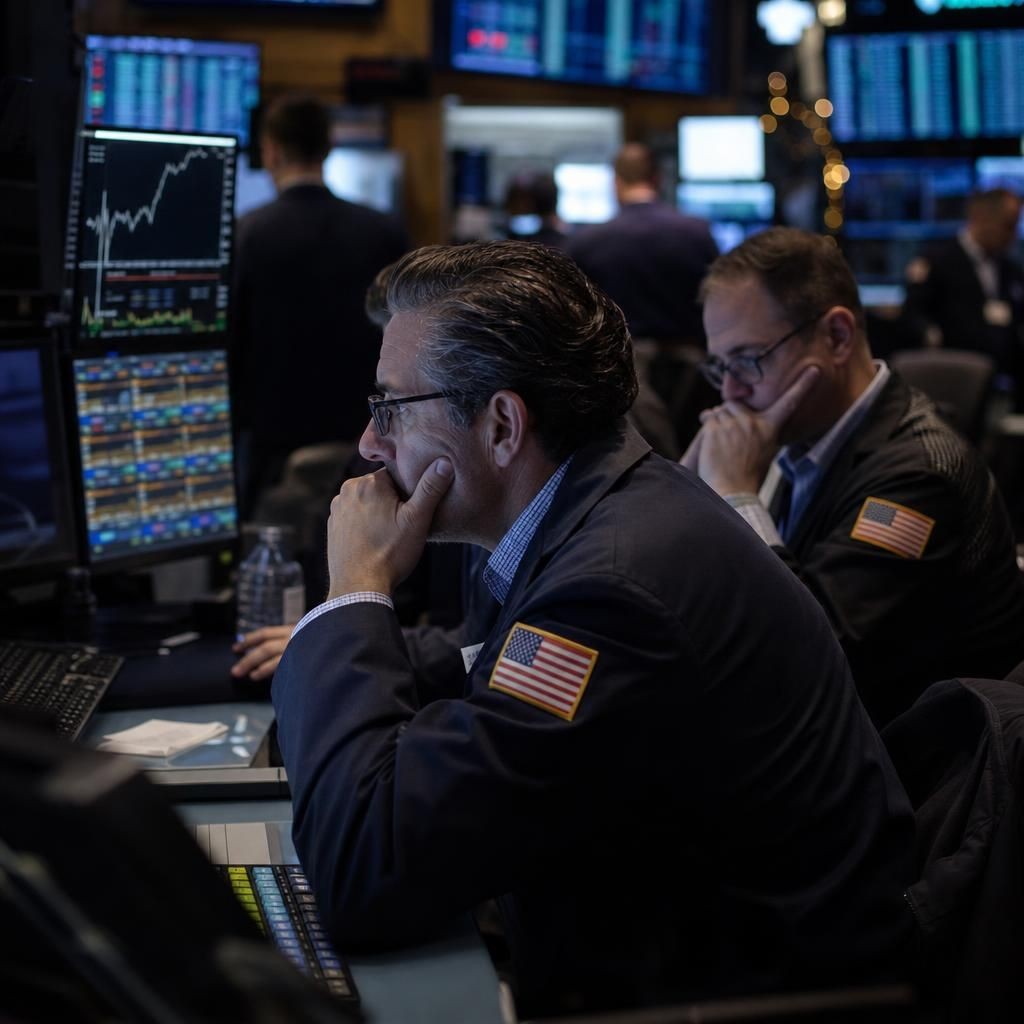

Fed Rate Cut Hopes Fade Amid Mideast Tensions and Neel Kashkari's Hawkish Signals
U.S. equity markets continued their seesaw pattern on March 4, 2026, caught between lingering optimism for Federal Reserve rate relief and fresh headwinds from hawkish central bank commentary and escalating geopolitical risks in the Middle East. The S&P 500, which had been flirting with all-time highs on the back of anticipated Fed easing, dipped more than 2% at one point before dip buyers stepped in, preventing a full retreat into negative territory. This intraday volatility encapsulates the shifting narrative driving financial markets, particularly in macro-sensitive sectors like bonds, ETFs, and banking stocks.[1]
Neel Kashkari Pours Cold Water on Rate Cut Expectations
Central to the day's market dynamics was commentary from Neel Kashkari, President of the Federal Reserve Bank of Minneapolis. Speaking on Bloomberg's "Invest" program within the last 48 hours, Kashkari explicitly stated that markets should not expect any downward movement in interest rates over the next couple of weeks. More strikingly, he left the door open to the possibility of a rate hike, a prospect that has largely been off the table in recent Fed rhetoric.[1]
This hawkish tilt marks a notable departure from the dovish undertones that propelled the S&P toward record levels earlier in the year. Investors had baked in multiple rate cuts as a core pillar of the bull case, with Treasury yields compressing and bond ETFs like the iShares 20+ Year Treasury Bond ETF (TLT) rallying accordingly. Kashkari's remarks, echoed by other Fed speakers, suggest a data-dependent pause or reversal, potentially extending the higher-for-longer rate environment into 2026.
For bond markets, the implications are profound. The 10-year U.S. Treasury yield, which had been trending lower in anticipation of cuts, could face upward pressure if hike probabilities rise. This would weigh on duration-sensitive portfolios and mortgage-backed securities, areas where banks hold significant exposure. Regional banks, already navigating net interest margin compression, could see further strain if yields spike without corresponding loan growth.
Mideast Conflict Disrupts Oil Flows, Amplifies Macro Risks
Layered atop Fed policy uncertainty is the intensifying conflict in the Middle East, with direct repercussions for global energy markets. Crude oil prices surged 8% in overnight trading, triggered by panic selling amid reports of production shutdowns in Iraq and an incident involving a rock impacting infrastructure. The Strait of Hormuz, through which roughly 20% of global oil transits, remains a focal point of concern, with any escalation poised to elevate insurance costs and freight rates dynamically.[1]
While markets have absorbed the shock better than expected from an S&P perspective, the energy shock introduces inflationary tailwinds that could further delay Fed easing. Brent crude, already elevated, risks testing $90 per barrel if disruptions persist, echoing the 2022 dynamics that forced the Fed to accelerate tightening. This scenario would bolster bank net interest margins in the near term but erode consumer spending power, hitting cyclical sectors hard.
ETFs tracking energy, such as the Energy Select Sector SPDR Fund (XLE), stand to benefit from supply tightness, but broader market ETFs like the SPDR S&P 500 ETF (SPY) face headwinds from correlated risk-off flows. Fixed-income investors may pivot toward inflation-protected securities like TIPS ETFs, anticipating pass-through effects to CPI.
Market Technicals: Dip Buyers Signal Resilience
Despite the S&P's more than 2% intraday plunge, dip buyers emerged forcefully, underscoring underlying market resilience. The index hovered near breakeven by session's end, a testament to constructive breadth and dip-buying interest in quality names. This pattern aligns with recent behavior where macro headlines trigger tactical pullbacks, only for algorithmic and institutional flows to cap downside.[1]
From a technical standpoint, the S&P remains within striking distance of all-time highs, with key support at the 50-day moving average around recent lows. However, sustained breaks below this level could accelerate toward the 200-day average, amplifying volatility in leveraged ETF products like the ProShares UltraPro S&P500 (UPRO).
Banking Sector Implications: Margins vs. Loan Demand
Banks, as macro bellwethers, are at the epicenter of these crosscurrents. Higher-for-longer rates, now reinforced by Kashkari, support elevated net interest income (NII), a boon for money-center giants like JPMorgan Chase and Bank of America. Yet, Mideast-driven oil spikes threaten recession risks via channeled inflation, curbing loan demand in commercial real estate and consumer segments.
Recent quarterly data underscores this tension: while NII growth persists, deposit betas remain sticky, limiting upside. Regional lenders, more exposed to CRE, trade at discounts reflecting downside risks. Investors may favor high-quality bank ETFs like the SPDR S&P Bank ETF (KBE) for tactical exposure, balancing yield and cyclical sensitivity.
Broadening the Lens: Retail Earnings Provide Counterpoint
Amid macro turbulence, corporate earnings offered pockets of positivity. Target Corporation shares notched their best day since at least April, propelled by a forecast that countered a fourth straight quarter of same-store sales contraction at -2.5%. Management outlined $2 billion in 2026 investments—$1 billion each in capital expenditures and operating expenses—targeted at store remodels, labor augmentation, and category re-merchandising.[1]
Similarly, Best Buy enjoyed its strongest session since October, buoyed by upbeat guidance. UBS maintains Buy ratings on both, highlighting execution improvements under new leadership. These developments signal consumer resilience in select discretionary pockets, potentially mitigating macro drags on bank consumer portfolios.
In contrast, On Holding AG endured one of its worst days since August after full-year net sales guidance disappointed, despite exceeding 3 billion Swiss francs in quarterly sales and margin expansion of over 2 percentage points. This divergence illustrates sector rotation amid uncertainty, with defensive retail gaining favor.[1]
Strategic Positioning for Investors
For macro-oriented portfolios, the confluence of Fed hawkishness and oil risks warrants defensive tilts. Bond ladders with intermediate durations offer yield without excessive convexity risk, while floating-rate note ETFs like the iShares Floating Rate Bond ETF (FLOT) hedge rate volatility. Bank stocks with fortress balance sheets—think Tier 1 capital ratios above 13%—provide income stability.
ETFs remain efficient vehicles: consider the Vanguard Total Bond Market ETF (BND) for broad fixed-income exposure, paired with energy tilts via XLE. Equity dip-buying opportunities persist in quality cyclicals, but position sizing should reflect heightened VIX levels implied by recent swings.
Outlook: Data-Driven Path Forward
Looking ahead, upcoming CPI data and Fed minutes will calibrate hike probabilities. Kashkari's timeline suggests a March FOMC hold, with April as the pivot. Mideast de-escalation could unwind oil premia, but persistent tensions favor a risk-off bias.
Markets have priced in resilience thus far, but the narrative shift from "cuts ahead" to "pause or hike" demands vigilance. Bullish undertones persist for structurally sound assets, yet tactical patience prevails in this Fed-geopolitical nexus. Investors positioned for higher rates and energy inflation hold an edge as 2026 unfolds.
This analysis draws on real-time market developments as of March 4, 2026, emphasizing verifiable data points from leading financial broadcasts.[1]