
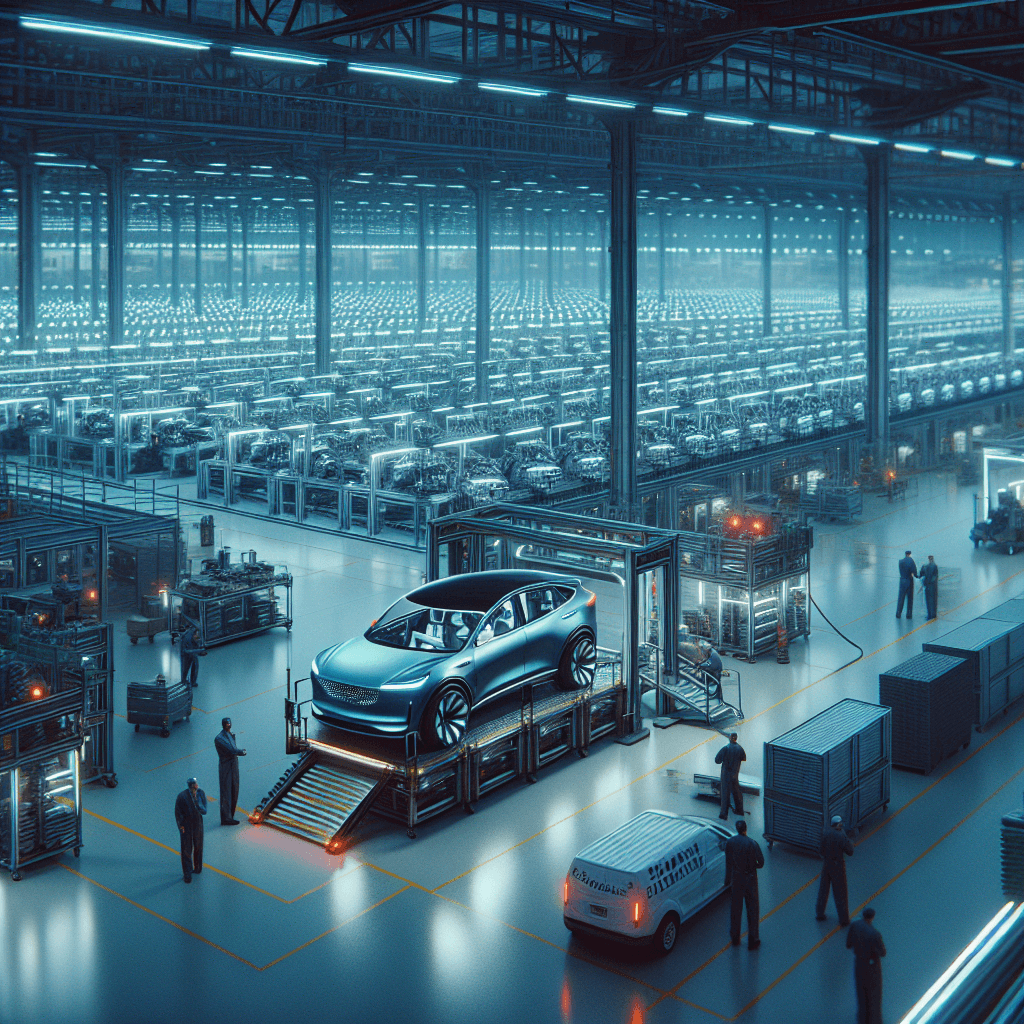
Tesla's Cybercab Enters Mass Production: A Pivotal Moment for Autonomous Mobility
Tesla Inc. (TSLA) has officially launched mass production of its Cybercab robotaxi at Gigafactory Texas, marking a significant escalation in the company's pursuit of a fully autonomous ride-hailing network. Following the debut of the first production unit in February 2026, Tesla has shifted from single-unit builds to volume manufacturing, with dozens of vehicles already observed in outbound lots and plans to reach hundreds per week.[1][2][3] This development, confirmed by CEO Elon Musk and VP of Vehicle Engineering Lars Moravy, underscores Tesla's aggressive timeline for deploying unsupervised Full Self-Driving (FSD) technology.
Production Ramp Details and Technical Specifications
The Cybercab is a purpose-built, two-seater electric vehicle devoid of a steering wheel or pedals, engineered exclusively for autonomous operation. Production at Giga Texas, which already handles Model Y and Cybertruck assembly, now incorporates dedicated lines for the Cybercab. Early units feature a surprising glossy gold finish, diverging from initial prototypes and sparking widespread interest in the EV community.[1][2] Tesla has explicitly stated there is no production cap, dispelling concerns over limitations like the 2,500-unit restriction applied to other models, as clarified by Moravy on April 22, 2026.[3]
This ramp-up is critical for scaling Tesla's robotaxi fleet. Observers note that the initial output is earmarked for testing, validation, and early deployment, laying the groundwork for a network promising rides at a fraction of current costs—potentially pennies per mile once FSD achieves unsupervised reliability.[2] The vehicle's vision-only system, powered by advanced cameras and AI, positions it as a cornerstone of Tesla's mobility strategy.
Market Reaction and Stock Implications
Tesla's shares have shown resilience amid broader market volatility, with the Cybercab news providing a bullish catalyst. As of late April 2026, TSLA trades at a premium valuation, reflecting investor optimism in its dual pillars of EV sales and autonomy. The production start validates Tesla's execution prowess, particularly after months of prototype development since the 2024 'We, Robot' unveiling.[1]
From a financial perspective, the robotaxi network represents a high-margin revenue stream. Analysts project that widespread adoption could generate billions in recurring income, dwarfing traditional auto sales. A Polymarket prediction market implies a 32% probability of Cybercab pricing at $30,000 or less in 2026, which would enhance accessibility and fleet scalability.[4] However, TSLA's forward P/E ratio remains elevated, baking in substantial growth assumptions tied to autonomy success.
Broader Impact on Tech Stocks and the Sector
The Cybercab ramp reverberates across the technology sector, intensifying competition in autonomous driving and smart mobility. Rivals like Waymo (Alphabet) and Cruise (GM) face heightened pressure, as Tesla's vertical integration—spanning hardware, software, and data—offers cost advantages. This could compress margins for pure-play AV firms and legacy automakers slow to pivot.
Related tech stocks, including semiconductor providers like NVIDIA (NVDA) and Mobileye (MBLY), stand to benefit from surging demand for AI chips and sensors. Tesla's FSD relies heavily on NVIDIA hardware, potentially boosting supplier revenues as production scales. Conversely, ride-hailing giants Uber (UBER) and Lyft (LYFT) confront existential threats, with robotaxis poised to undercut driver-dependent models by eliminating labor costs, which comprise 60-70% of their expenses.
Risks and Challenges Ahead
Despite the momentum, significant hurdles persist. Tesla acknowledges that 'autonomy has yet to be solved,' with FSD software requiring refinements for safety levels exceeding human drivers.[1] Regulatory approvals remain a wildcard; unsupervised operations demand clearance from bodies like the NHTSA and state DMVs, processes that have delayed competitors for years.
Execution risks are highlighted in recent analyses, including pricing uncertainty and supply chain dependencies. While Giga Texas output is ramping, global scaling—potentially to Mexico or China—introduces geopolitical and logistical variables.[4] Investors must monitor Q2 2026 earnings for production updates and FSD progress metrics, such as miles between interventions.
Opportunities for Investors
For tech investors, the Cybercab narrative offers asymmetric upside. A successful robotaxi rollout could propel TSLA toward trillion-dollar valuations, driven by network effects akin to Uber's early growth but with superior economics. Diversified exposure via ETFs like ARKK or DRIV provides lower-risk entry, capturing AV theme breadth.
Long-term, urban transformation beckons: reduced congestion, lower emissions, and reclaimed parking spaces. Economic models suggest robotaxis could cut transportation costs by 50-80%, boosting productivity and consumer spending in adjacent sectors like real estate and logistics.
Strategic Implications for Enterprises
Beyond stocks, enterprises eye robotaxi integration for employee transport and last-mile logistics. Tech firms in AI and IoT stand to partner with Tesla, embedding FSD into supply chains. This convergence amplifies the topic's relevance amid trending discussions on AI workplace integration and smart manufacturing.
Comparative Analysis: Tesla vs. Peers
Tesla Cybercab: No controls, $<30k potential, unlimited production.[3][4]
Waymo One: Sensor-heavy, high costs, limited scaling.
Cruise Origin: Regulatory setbacks post-2023 incidents.
Tesla's lead in data (billions of FSD miles) and manufacturing scale differentiates it, per industry benchmarks.
Forward Outlook
As Cybercab units proliferate from Giga Texas, Tesla edges closer to operationalizing its robotaxi vision. Investors positioning now balance near-term volatility—tied to earnings and regs—against transformative potential. With production unconstrained and aesthetic innovations signaling confidence, this ramp embodies Tesla's hallmark blend of ambition and execution.[1][2][3]
In the evolving tech landscape, the Cybercab's rollout not only fortifies TSLA's moat but catalyzes sector-wide innovation. Prudent allocation to autonomy leaders, informed by real-time milestones, positions portfolios for the driverless era.

