Middle East Flashpoint: Why This Round Matters For Markets
Renewed hostilities between Iran and Israel have pushed the Middle East back to the brink of wider conflict, with direct implications for global energy markets and shipping routes. According to multiple news reports, Israeli forces launched strikes on targets in central and western Iran after alleging Tehran had fired missiles toward Israel, prompting Iranian retaliatory attacks and raising fears of broader regional escalation.[5] Oil prices have risen sharply as markets reassess the risk of disruption to supply and transit through key chokepoints, particularly the Strait of Hormuz.[2][3]
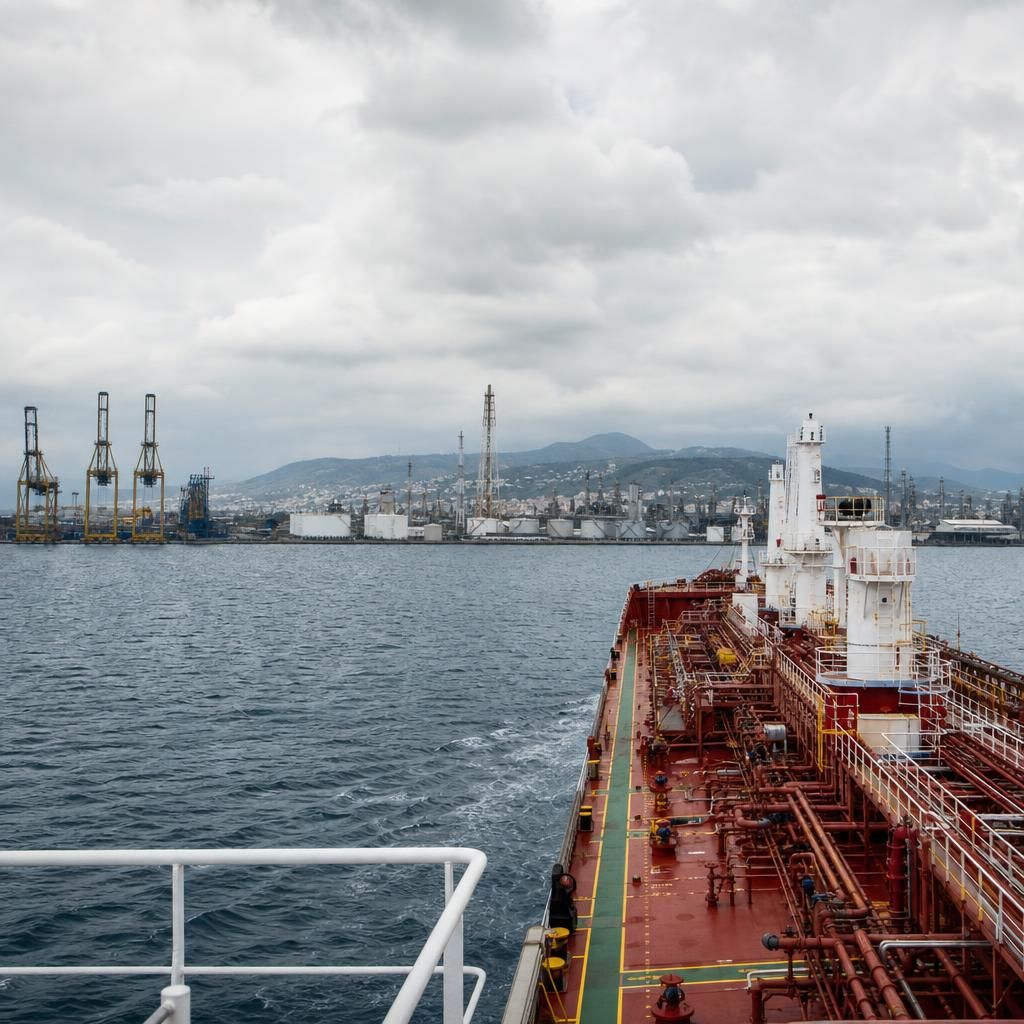
Beyond oil, the security backdrop for commercial shipping has deteriorated. In one recent incident, a commercial cargo vessel with 24 Indian crew members on board came under attack near the Strait of Hormuz, underscoring how quickly conflict dynamics can spill over into maritime risk and insurance costs.[4] The combination of higher crude prices and elevated shipping risk is now a material macro variable for US companies, just as investors had begun to price a disinflationary glide path and a gradual Federal Reserve policy pivot.
Energy Channel: Higher Oil, Higher Input Costs
The most immediate transmission mechanism into the US economy is the energy channel. With global oil prices rising in response to the renewed Iran–Israel confrontation and fears of disruption to Middle Eastern flows, fuel and feedstock costs for US corporates are moving higher.[2][3] The degree of impact will depend on the persistence and magnitude of the price spike, but several sectors are already exposed:
Transportation and logistics: Airlines, trucking firms, rail operators and parcel carriers are directly sensitive to jet fuel and diesel prices. Every sustained 10–15% move higher in crude typically translates into measurable increases in fuel expenses over subsequent months, pressuring operating margins unless fuel surcharges or fare increases can be passed through quickly.
Energy-intensive manufacturing: Chemicals, metals, cement, glass, paper, and certain agricultural processing operations rely heavily on petroleum products, natural gas, or electricity prices linked to global fuel benchmarks. Higher input costs can compress margins in competitive product markets where price increases are constrained by demand conditions.
Consumer-facing sectors: Elevated gasoline prices are effectively a tax on disposable income. While the pass-through from crude to the pump is not one-for-one, a sustained jump in oil prices would weigh on discretionary spending for lower- and middle-income households, which matters for retailers, restaurants, and select services.
So far, the market narrative is that this is an energy shock driven by geopolitics, not demand strength. That distinction matters: higher prices without stronger underlying demand are more likely to pressure margins and dampen consumption than to signal a robust earnings environment.
Shipping Routes And Supply Chains: Another Layer Of Risk
The Middle East escalation has also raised the perceived risk premium across critical maritime routes. The attack on a commercial cargo vessel near the Strait of Hormuz highlights that non-energy trade flows can be affected quickly when conflict zones overlap with key shipping lanes.[4] For global supply chains already tested by Red Sea disruptions and prior pandemic-era bottlenecks, another area of maritime stress has several implications for US businesses.
First, shipping insurers are likely to reassess war risk premiums for vessels transiting the region. Higher insurance costs can feed into freight rates, particularly for tankers and bulk carriers, but also for container ships if risk perceptions broaden. While many US-bound goods are not directly routed through the Strait of Hormuz, global shipping is highly networked, and disruptions or cost increases in one corridor can cascade through vessel availability, charter rates, and routing decisions.
Second, companies with supply chains linked to the Gulf region—whether for petrochemicals, specialty materials, or finished goods—face renewed uncertainty on transit times and reliability. Even without outright blockages, the mere possibility of further attacks can prompt rerouting or precautionary delays, stretching lead times and increasing working capital needs.
Third, logistics and procurement teams that had just begun to normalize inventories and transport contracts after the pandemic may need to revisit contingency planning. This includes reevaluating safety stock levels, diversifying supplier bases, and negotiating flexible shipping arrangements that can adapt to changing risk conditions in Middle Eastern waters.
Corporate Earnings: Sector Winners And Losers
The earnings impact will be uneven across sectors, with several clear potential losers—and a few partial beneficiaries—if elevated energy prices and shipping risks persist.
Pressure Points
Airlines and travel: A higher fuel bill is an immediate headwind for US airlines. While carriers can deploy fuel surcharges or adjust capacity, competitive dynamics and demand elasticity limit full pass-through to ticket prices, especially on price-sensitive routes. Travel-related businesses such as cruise lines may also face higher fuel costs and potential demand softening if elevated geopolitical risk in the Middle East dampens certain tourism flows.
Consumer discretionary and retail: If gasoline prices rise alongside crude, US consumers’ real purchasing power declines. That tends to hit big-box retailers, apparel, and discretionary goods first, particularly in lower-income segments that have less buffer for fuel and food price shocks. Higher freight costs can further compress margins if retailers absorb part of the increase to sustain traffic.
Industrial manufacturers: Energy-intensive producers and those reliant on imported inputs from or via the Middle East could face a double squeeze: higher input and freight costs, plus potential delays in critical components. This scenario complicates earnings guidance and may delay or resize capital expenditure plans.
Potential Beneficiaries
US energy producers: Exploration and production companies, particularly those in shale basins, typically benefit from higher global benchmark prices if domestic differentials remain contained. Stronger realized prices support cash flow and shareholder distributions, although equity investors will also weigh the risk of demand destruction if prices rise too far.
Oilfield services and equipment: If sustained higher prices encourage producers to maintain or modestly increase drilling activity, service providers can see improved pricing and utilization. However, after prior periods of volatility, management teams remain cautious about overcommitting capital.
Logistics providers with pricing power: Select shipping lines, freight forwarders, and logistics platforms may be able to pass through higher costs and capture better yields amid tight capacity and elevated risk premiums. The key differentiator will be network flexibility and contract structures.
Inflation, Fed Policy, And Market Sentiment
The broader macro question is how this renewed Middle East tension and oil price spike intersect with expectations for US inflation and the Federal Reserve’s policy path. Investors had increasingly positioned for a measured easing cycle, predicated on cooling inflation and slowing but resilient growth. A geopolitically driven energy shock complicates that narrative.
First, higher energy prices can feed into headline inflation relatively quickly through gasoline, fuel oil, and transportation costs. Even if core inflation—excluding food and energy—remains contained, a visible uptick in headline readings can influence inflation expectations and political scrutiny.
Second, if firms facing higher fuel and freight costs attempt to pass them through to end customers, there is a risk of renewed price pressures in goods and services categories where demand remains reasonably firm. That said, competitive pressures and cautious consumers may limit pricing power in some segments, forcing companies to absorb more of the shock in margins rather than prices.
Third, the Fed historically looks through transient supply-side shocks, particularly when underlying demand is not overheating. However, if energy-driven price pressures appear persistent or start to influence wage demands and broader inflation expectations, policymakers may feel constrained in how quickly they can ease, even as growth slows. In that scenario, the risk balance shifts toward stagflation-lite: softer real activity but stickier inflation than markets had hoped.
Capital Expenditure, Reshoring, And Risk Management
The latest Middle East developments also reinforce several structural themes in corporate strategy and capital allocation that have been building since the pandemic and the earlier Red Sea disruptions:
Supply chain diversification: The accumulation of geopolitical shocks—from the Russia–Ukraine conflict to Red Sea attacks and now renewed Iran–Israel tensions—strengthens the case for diversifying sourcing and production footprints. US firms are likely to continue exploring nearshoring and friend-shoring options in Mexico, Canada, and select Asian partners less exposed to high-risk maritime zones.
Inventory and logistics resilience: Just-in-time models are being recalibrated toward just-in-case for selected critical inputs. Companies may tolerate slightly higher inventory levels and logistics redundancy in exchange for reduced vulnerability to chokepoint disruptions in areas such as the Strait of Hormuz and surrounding waters.
Energy transition and hedging: Volatility in oil prices tied to geopolitical risk can encourage incremental investment in energy efficiency, alternative fuels, and long-term supply contracts. More corporates may revisit hedging programs for fuel and freight, balancing the cost of financial hedges against the earnings volatility of repeated energy shocks.
These strategic shifts are not new, but each new episode of geopolitical tension in key energy and shipping regions nudges the corporate calculus further toward resilience, even at the cost of near-term efficiency.
Market Positioning And Investor Implications
For equity and credit investors, the latest Iran–Israel escalation and associated oil price jump invite a reassessment of sector exposures and risk premia. Historically, periods of Middle East tension and oil spikes have produced:
Outperformance of energy equities relative to broader indices in the short term, particularly for leveraged plays on crude pricing.
Underperformance in fuel-sensitive and consumer discretionary names, especially where valuations embed optimistic margin and demand assumptions.
Higher volatility in rates and inflation expectations as markets recalibrate the Fed path and term premiums.
Credit markets may also price in slightly wider spreads for sectors with exposure to energy costs and shipping risks, although the magnitude will depend on how sustained and severe the disruption becomes. For now, the key questions for investors are duration and escalation: Does this episode stabilize with limited physical disruption, or does it mark the start of a more persistent, high-risk regime around the Strait of Hormuz?
Key Watchpoints For US Businesses And Markets
Looking ahead, several indicators will determine how deep and lasting the impact of the Middle East conflict fallout will be on US businesses and the broader economy:
Trajectory of oil prices: Whether crude stabilizes, retraces, or continues higher will shape everything from airline guidance to consumer sentiment. A rapid retreat would frame this as a short-lived scare; a sustained plateau at elevated levels would support a more structural narrative.
Security of shipping near Hormuz: Further attacks on commercial vessels or explicit threats to tanker traffic would materially escalate risk premia and could force rerouting of flows, adding cost and complexity to global supply chains.
Policy responses: US and allied diplomatic and security moves in the region, including naval deployments and efforts to secure shipping lanes, will influence how markets price tail risks.
Fed communication: How Federal Reserve officials characterize energy-driven price pressures in upcoming speeches and meetings will be critical for bond markets and rate-sensitive equities. Clear messaging that distinguishes between transitory shocks and underlying inflation will help anchor expectations.
For now, US corporates face another test of their ability to manage geopolitical volatility. Balance sheet strength, risk management sophistication, and operational flexibility will be key differentiators as firms navigate higher energy costs, potential shipping disruptions, and a more complex macro backdrop shaped by events far from US shores.