
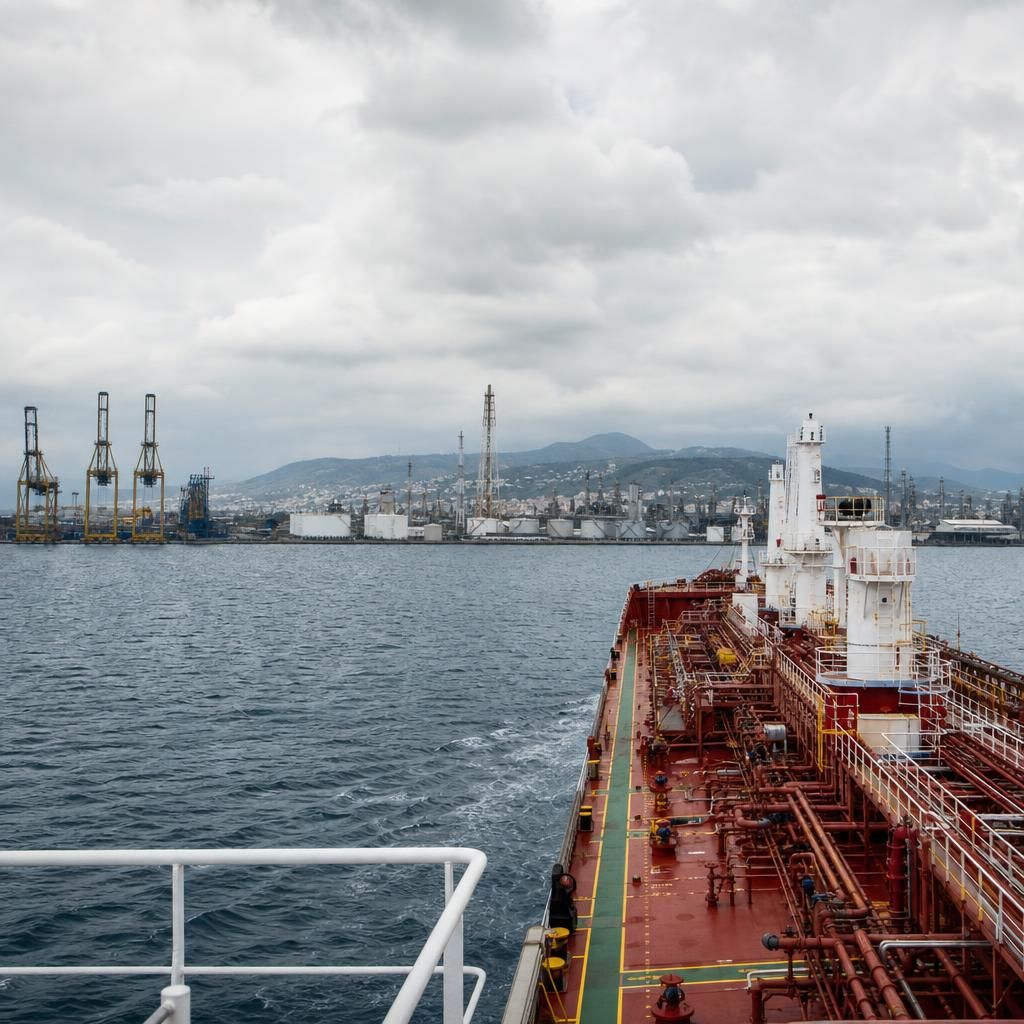
Hormuz Risk Pushes Oil Above $100 as Supply Chains and Inflation Expectations Come Under Pressure
Renewed attacks on vessels and escalating hostilities around the Strait of Hormuz have lifted Brent crude above $100 a barrel, creating a fresh threat to corporate margins, transportation networks and global inflation. The market is balancing higher security risks against evidence that oil continues to move through the waterway at substantially reduced but still meaningful volumes.
Oil market reprices geopolitical risk
Brent futures rose 93 cents, or 0.92%, to $101.51 a barrel by 0022 GMT on October 7, while West Texas Intermediate gained 82 cents, or 0.92%, to $90.25. The move followed a volatile session in which traders assessed increased Middle Eastern exports, proposed Group of Seven emergency stockpile releases and continuing attacks linked to the regional conflict.
The Strait of Hormuz remains the central transmission point for the crisis. The waterway normally carries a significant share of global seaborne oil and gas, making even a partial disruption economically important. Industry estimates cited in recent market reporting put flows at roughly 12 million barrels per day over the previous seven to 10 days, while Shell executives said Middle East oil flows had recovered to approximately 80% of pre-conflict levels.
That recovery has prevented an immediate physical supply collapse, but it has not removed the risk premium. The United Kingdom Maritime Trade Operations agency reported at least nine attacks in the waterway during October. Shipping companies therefore face higher insurance, security and freight costs even when vessels continue to transit.
Corporate earnings face an uneven shock
Higher crude prices affect companies through several channels. Airlines, trucking operators, parcel-delivery companies, chemical producers, refiners and manufacturers with energy-intensive operations face direct cost pressure. Businesses with limited pricing power may absorb part of the increase, reducing operating margins. Companies able to pass costs to customers could preserve profitability, but that may weaken demand and increase pressure on central banks.
Transportation is particularly exposed. Fuel surcharges can offset part of the impact for freight carriers, but they generally lag changes in spot fuel prices and do not protect all contract revenue. Tanker operators may benefit from elevated rates, while cargo owners and importers face more expensive logistics. Reports that tanker freight for navigating the strait had risen sharply illustrate how the security premium extends beyond crude itself.
Energy producers and selected oilfield-service companies are positioned differently. Higher prices can improve cash flow, support capital returns and strengthen earnings for producers outside the conflict zone. However, the benefits depend on production availability, hedging positions and operating exposure to storm-related disruptions in US oil-producing regions. Refiners may initially benefit from elevated product margins, although weaker consumer demand and logistics constraints can eventually narrow those gains.
Supply-chain risk broadens beyond energy
The immediate concern is not only the volume of oil lost, but the reliability of delivery. Manufacturers typically plan inventories around predictable transit times. Security delays, rerouting, vessel inspections and higher insurance premiums can increase working-capital needs and create shortages even if aggregate supply remains available.
Energy-intensive industries—including chemicals, plastics, glass, metals and cement—are especially sensitive because oil and gas influence both feedstock costs and electricity prices. Higher costs can move through industrial supply chains with a lag, first affecting producer margins and later appearing in prices for packaging, construction materials, machinery and consumer goods.
Asian refiners and independent buyers are also adjusting sourcing patterns. Recent reporting indicated that Chinese independent refiners were purchasing more Iraqi crude as restrictions reduced Iranian shipments and competition for Russian oil increased. Such substitutions can support physical availability, but they also lengthen trade routes, alter refining economics and raise competition for alternative barrels.
Inflation and monetary-policy implications
The US Energy Information Administration projected that world petroleum production would fall from a record 106.3 million barrels per day in 2025 to 101.1 million barrels per day in 2026, while demand would decline from 104.4 million to 102.4 million barrels per day. The simultaneous reduction in supply and demand underscores the macroeconomic tension: the conflict can weaken activity while lifting the cost of energy.
The agency also raised its 2026 average Brent forecast to approximately $98 a barrel, an 8% increase from its prior-month projection. A sustained price near or above $100 would affect headline inflation directly through gasoline, diesel and utility costs. It would also create second-round effects as businesses revise freight, production and pricing plans.
For the Federal Reserve, this combination is difficult. A temporary energy spike may not justify an aggressive policy response if inflation expectations remain anchored. A prolonged disruption, however, could keep services and goods inflation elevated while slowing household consumption. Higher fuel prices reduce disposable income, particularly for lower-income consumers, and can delay discretionary purchases such as travel, dining and durable goods.
Sanctions add compliance and trade friction
The United States has also imposed fresh sanctions targeting Iranian rail and automotive conglomerates and international suppliers connected to those sectors. The measures expand the commercial consequences of the conflict beyond energy and require banks, manufacturers, logistics providers and technology companies to reassess counterparties, payment channels and beneficial ownership.
Sanctions risk is operational as well as legal. Companies may suspend transactions involving ambiguous intermediaries, increase screening requirements or terminate relationships to avoid secondary exposure. Those steps can delay procurement and raise compliance costs, particularly for firms operating across jurisdictions with different enforcement standards.
At the same time, technology and trade tensions involving China complicate efforts to reroute supply chains. Reports concerning Chinese access to restricted advanced Nvidia Blackwell-platform chips through financial-leasing arrangements highlight the continuing difficulty of enforcing technology controls across complex commercial networks. Any further tightening could affect semiconductor equipment, cloud computing, artificial-intelligence infrastructure and electronics supply chains.
What investors should monitor
Three indicators will determine whether the current shock becomes a broader earnings event. First is the volume and consistency of tanker traffic through Hormuz. A sustained decline would matter more than isolated attacks because it would indicate that insurers and operators are reducing effective capacity.
Second is the duration of elevated Brent prices. A short-lived move can often be absorbed through hedging and inventory management. Prices remaining near $100 would have a much greater effect on transportation, industrial costs and consumer purchasing power.
Third is the response from governments and central banks. Emergency stockpile releases can soften an immediate shortage, but they cannot permanently replace disrupted production or resolve shipping risk. Fiscal support may protect households but could add to demand, while monetary easing could be constrained by renewed inflation.
Investment and corporate-planning implications
For businesses, the prudent response is scenario planning rather than reliance on a single oil-price forecast. Companies should test earnings sensitivity to higher fuel, freight and insurance expenses; review the concentration of suppliers and routes; and confirm that sanctions controls cover indirect counterparties.
Investors should distinguish between firms benefiting from higher commodity prices and those merely reporting stronger revenue while facing deteriorating margins. Balance-sheet strength, pricing power, fuel-hedging policies and geographic diversification are likely to become more important than headline sales growth if the disruption persists.
The present market evidence points to a serious but still fluid shock. Oil continues to transit Hormuz, and alternative regional exports are limiting the immediate supply deficit. Yet attacks, sanctions and technology restrictions are raising the cost of moving goods and capital. Until security conditions improve materially, US companies should expect greater earnings volatility, tighter supply-chain risk controls and renewed sensitivity to every move in crude prices.

